Fairmont Garage Door Repair Co.
Issue 2 of 3Garage DoorsLondon, Ontario
Garage Door Track Repair or Replacement: what the visit covers
What you get back is a door that runs its full height without a catch, hesitation or bang, with every roller seated in its channel and both sides rising together.
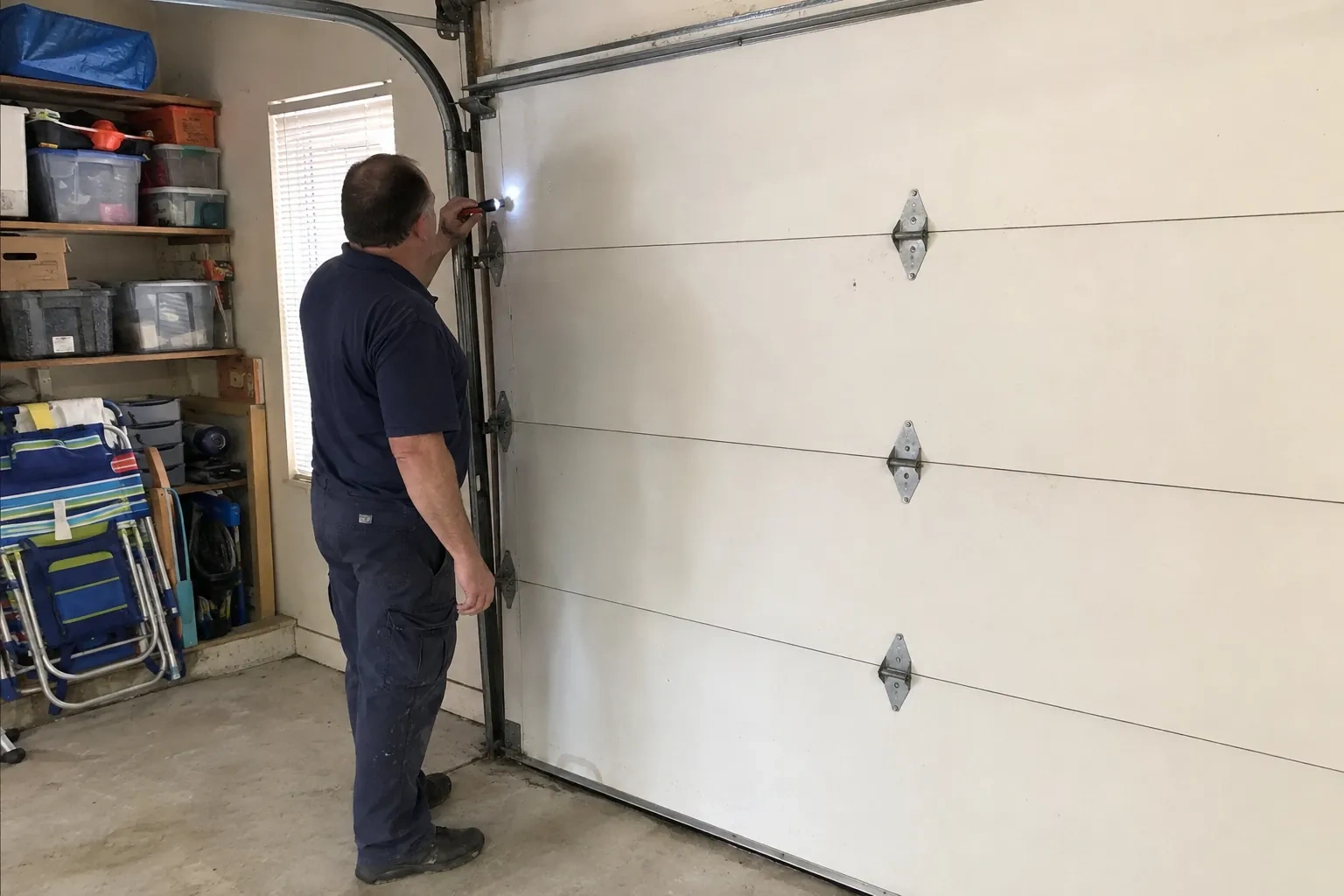
What you get back is a door that runs its full height without a catch, hesitation or bang, with every roller seated in its channel and both sides rising together. The track sits plumb and firm on the jambs, the horizontal runs hold level from solid hangers, and the door seals along the stop when closed. Because the track was set to the door and the springs re-tensioned to it, the door balances by hand and the opener works lightly. You also leave with a note of the track profile, radius and lift type, which makes any later part a simple match.
Reading the track system
Track comes in families, and the replacement parts have to belong to the same one. The technician notes the profile, two-inch on nearly all residential doors and three-inch on some heavy ones, and the radius of the curve, typically 12 or 15 inches, which sets how much headroom the door uses. The layout is identified as standard lift, low-headroom dual track or high lift, and the vertical run as bracket-mounted or on a continuous angle. The spring type matters too, since a torsion shaft bearing usually rides on the flag bracket at the top of the vertical track. These details decide what is ordered and how the work is sequenced.
Tension back, balance and opener tests
Once the track is fixed and every roller is seated, the springs are wound back to the turns the door calls for and the clamps come off. The technician lifts the door by hand through its full travel, watching each roller through the curve and along the horizontal run for any catch, and checks that the door holds itself at roughly waist height. It is run up and down several times by hand before the opener is reconnected, and the opener's travel limits and force settings are then adjusted to the newly aligned door, with the reversing test done against a block on the floor. You watch the finished door make the trip before the tools are packed.
A monthly look at the brackets and hangers
Track problems announce themselves early to anyone who looks. Once a month, with the door closed and the light on, run your eye down each vertical track: the brackets should sit flat against the wood with no gap behind them and no screw heads standing proud. Then look up at the horizontal runs and the angle hangers holding them; a hanger that has begun to lean or a run that no longer looks level with its partner is worth a call while it is a small adjustment. Finish by watching the door open once, checking that every roller stays in its channel through the curve, which is the same check the industry checklist asks for.