Garage Doors in London, OntarioThe bang you heardat seven this morning.
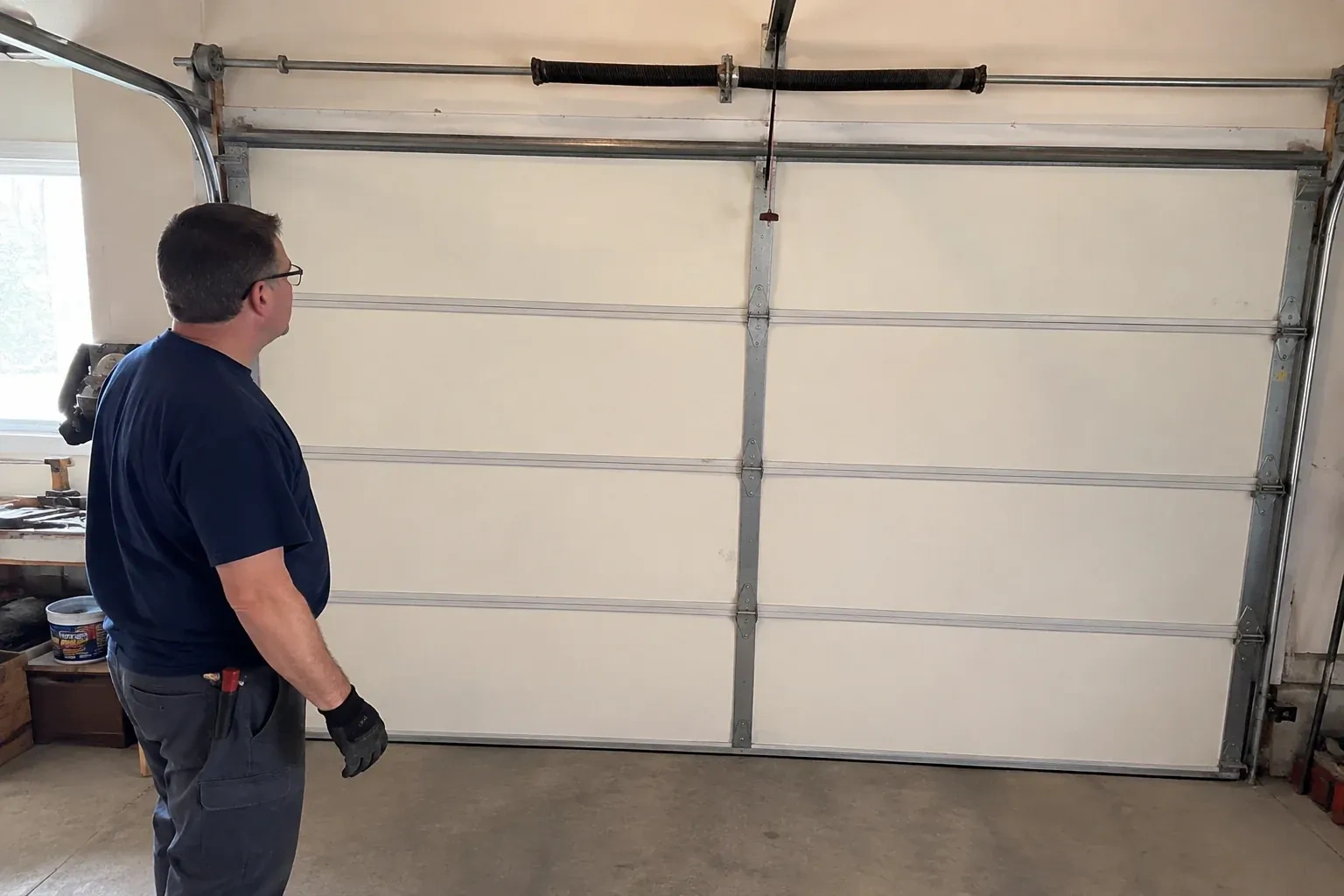
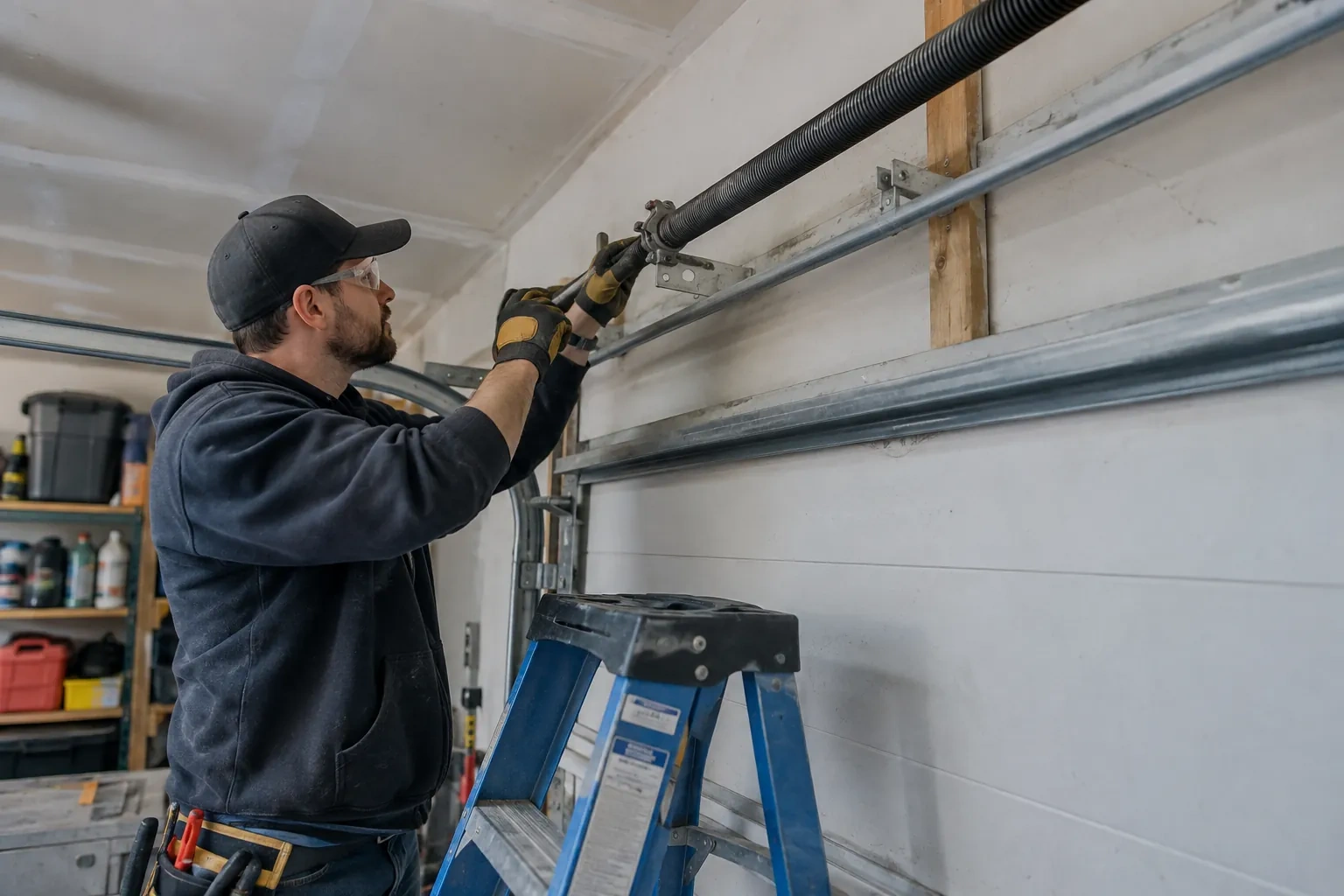
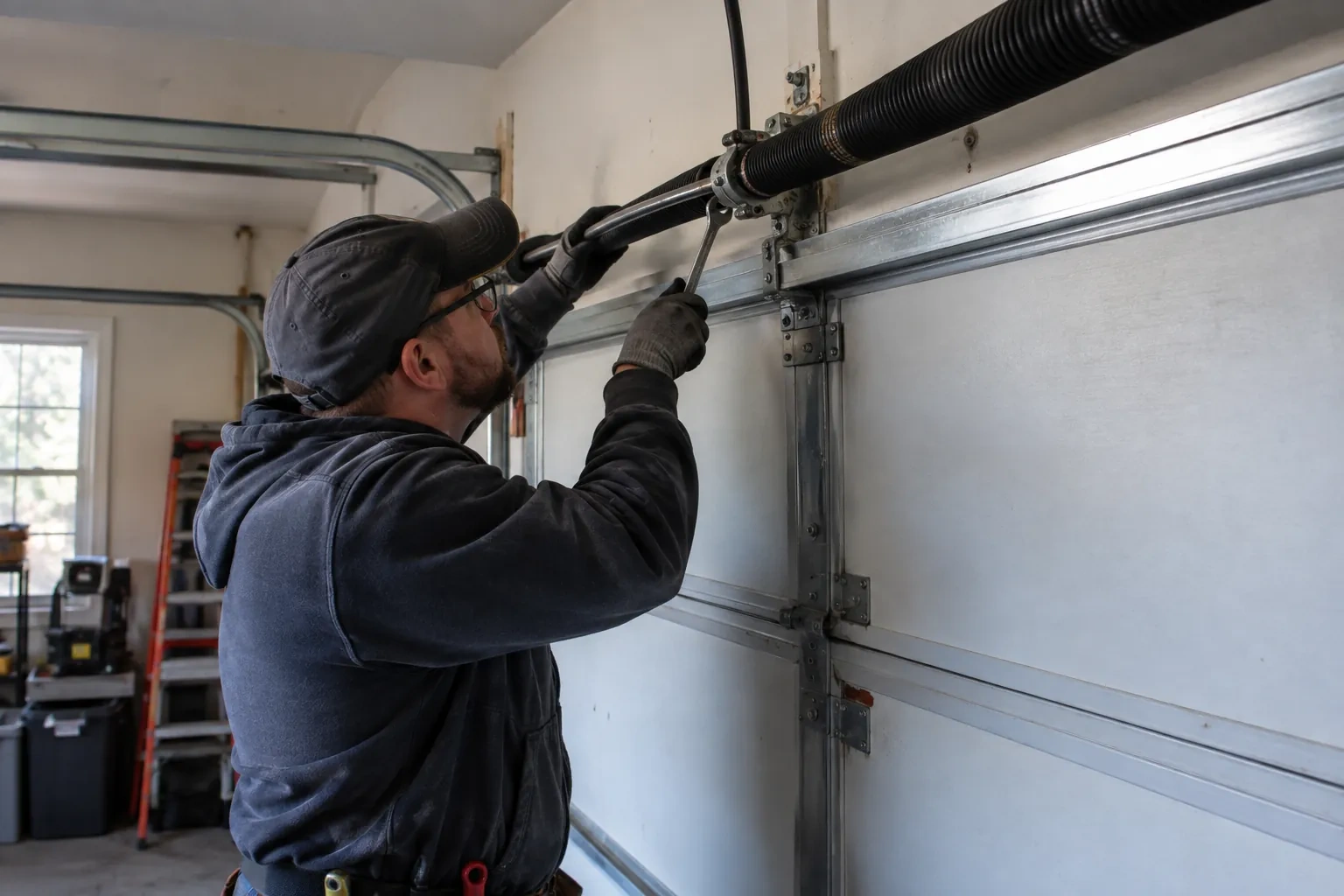
A torsion spring letting go sounds like something fell in the garage, and then the door refuses to lift. If that happened in London today, we bring the matching spring, replace it as a pair when the door has two, check the cables and bearings beside it, and rebalance the door before we leave.
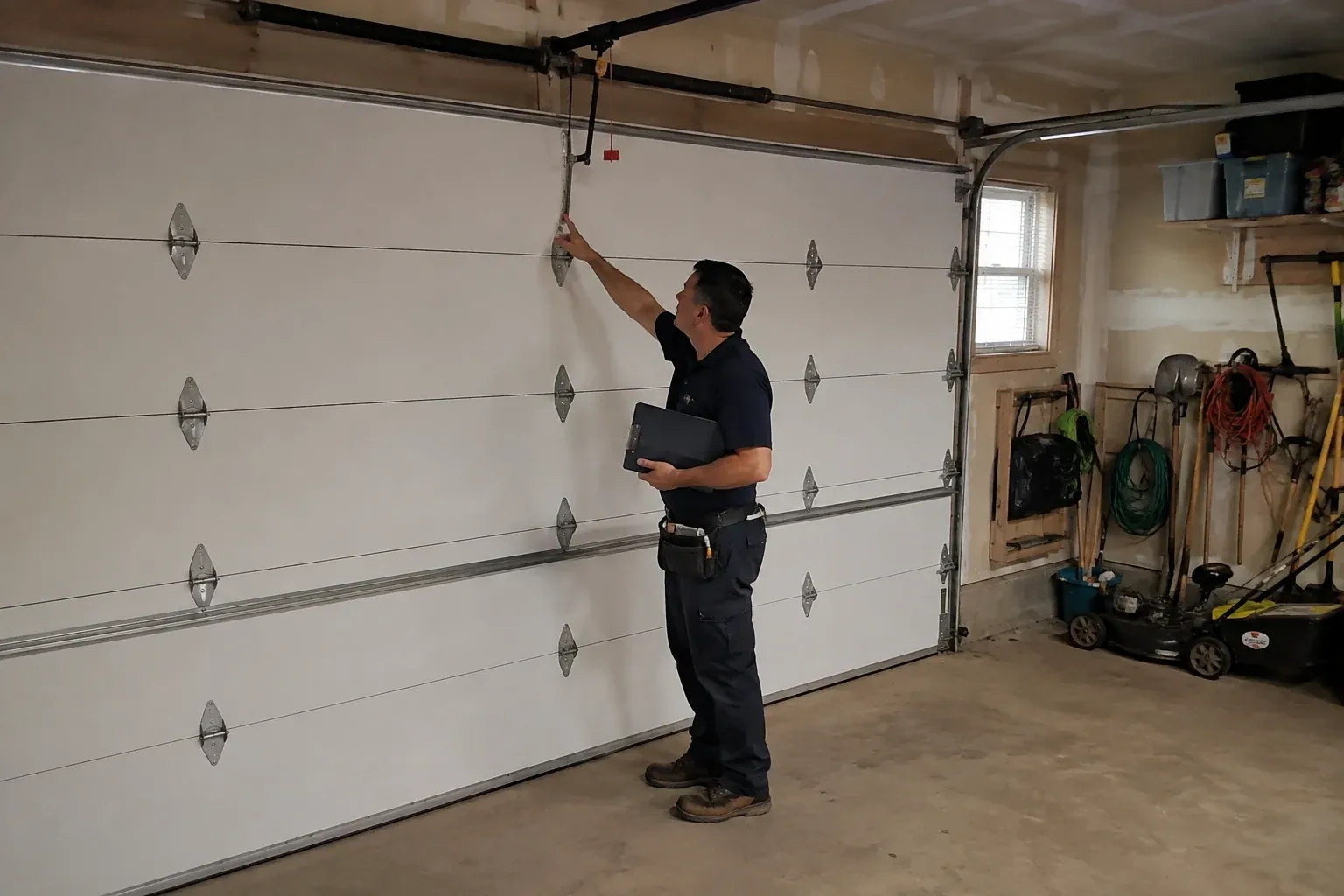
In London we have found that most people simply want to understand what happened to their door. So the technician explains as he goes: why the spring broke, what a balanced door feels like, how the sensors work. You end up knowing your door better and knowing what to listen for next time.
— Fairmont Garage Door Repair Co.
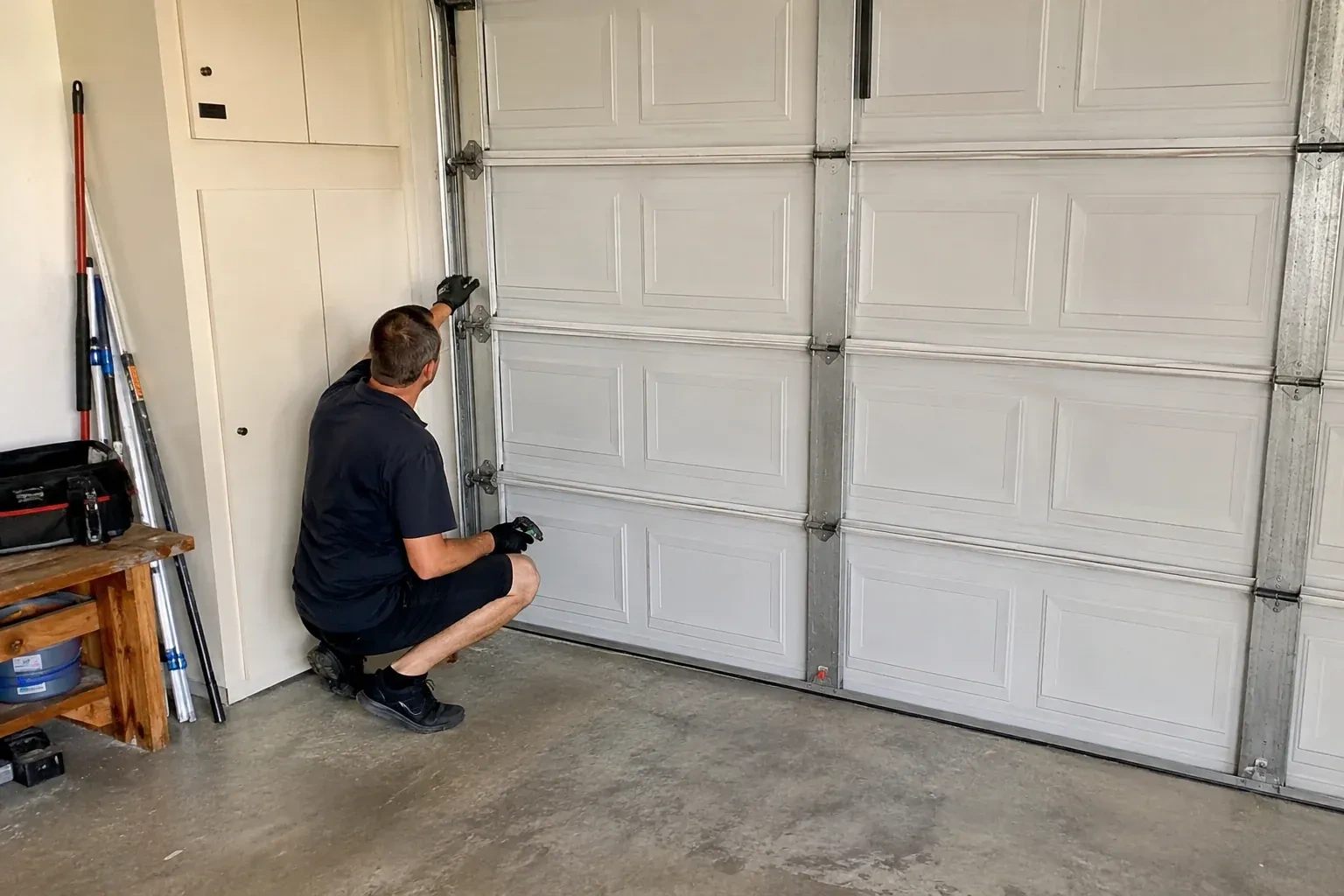
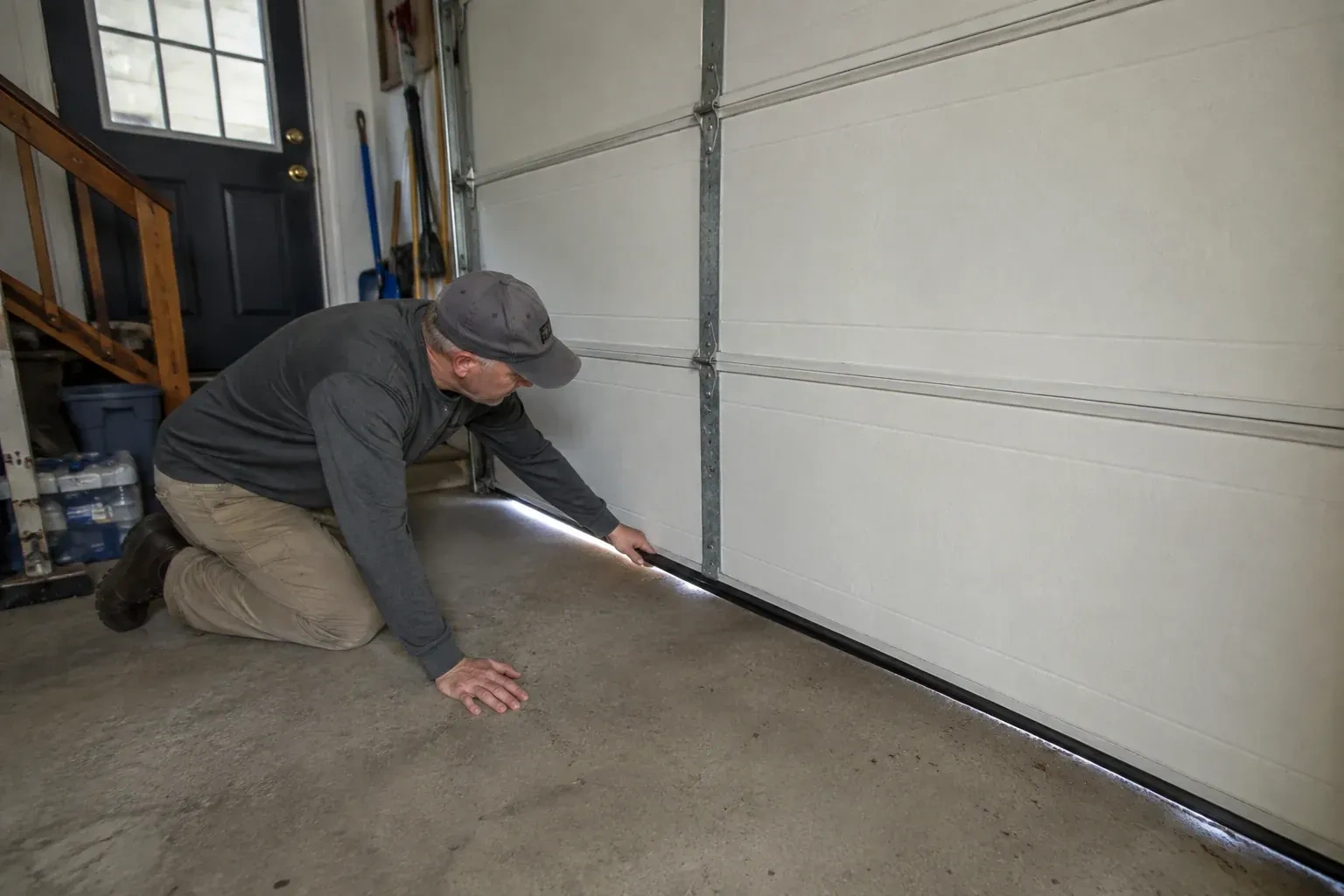
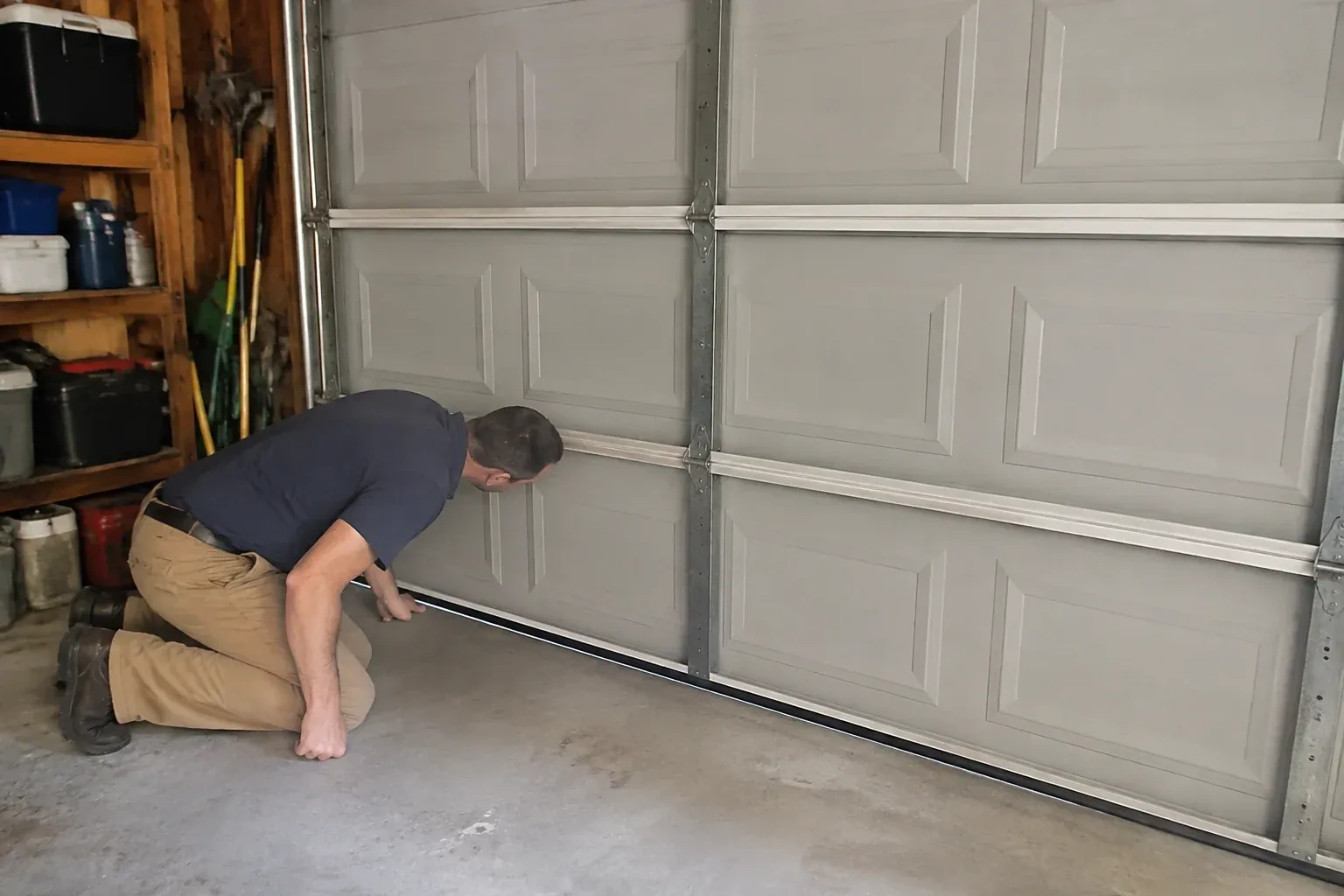
You understand what we foundWe point to the worn part, show what it should look like and explain what happens if it stays as it is.
Tools and parts kept tidyOur kit stays in one spot, cables and springs are bagged as they come out, and nothing gets left behind.
More than one way forwardRepair the part, refresh the whole system, or start over with a new door: we explain each so you can choose confidently.
Hours
HoursOpen 24/7
Nights and weekendsSame fees
In business22 years
VisitsOn-site assessment
Garage door services
Repairs and new doors
Every garage door service we offer in London is described the same way: what you might have noticed, what the technician checks first, how the work is done and what you have afterwards. Start with the symptom you are seeing and the right service will be easy to find.
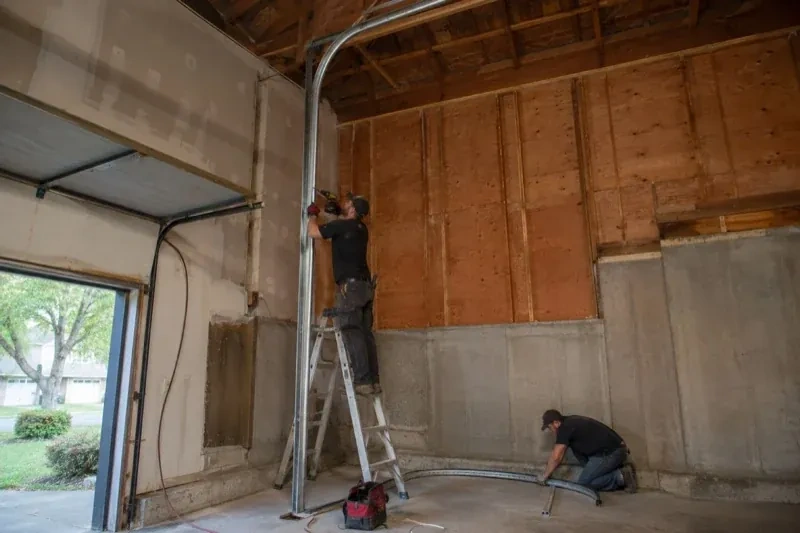
High-lift conversions raise the horizontal track toward the ceiling so the door opens higher, clearing a car lift or a tall truck. It is a change to the track, the drums and the springs, and it needs an opener that suits.
Whether the door was hit, has drifted out of alignment or has simply grown loud and tired, the work in this group aims at the same result: a door that runs smoothly, seals properly and does not need thinking about.
About 52% of homes in London were built in 1980 or earlier, according to the 2021 Census.
Where most houses were built a generation or more ago, a good share of garage doors are still the originals: wood or early steel sections on extension springs. Those doors respond well to fresh pulleys, safety cables and a careful balance, and the technician carries the parts for them.
49%
Single-detached houses make up about 49% of homes in London (2021 Census).
A neighbourhood with a mix of detached houses and townhouses or condos means a technician moves between a wide family double door and a narrow single in a row within the same afternoon. The van carries hardware for both, and each visit is planned for that door.
WhyEverything about a section replacement flows from knowing exactly which door you have.
A roller near the top corner is riding on the lip of the track rather than inside it, and the section above leans back a little more each week.The usual fix
WhyThe track is the pair of steel channels that guide every roller on a sectional garage door: a vertical run fixed to each jamb, a curve overhead, and a horizontal run hung from the ceiling.
The door starts to rise, gets about the height of your knee, then shudders and reverses.The usual fix
Why do bottom sections get damaged so often in winter?
Meltwater runs under the bottom seal during a thaw and freezes the door to the slab overnight. When the opener starts in the morning, it pulls on a door that is anchored at the bottom, and something yields: the section bows, a hinge tears from its stile or a cable jumps. Salt and slush thrown off the car then corrode the lower edge. Keeping the seal free of ice and rinsing salt away protects the new section.
Should the track be lubricated too?
No. The track is meant to be clean and dry so the wheels roll rather than slide. Grease or spray in the raceway collects dust, sand and, in winter, salt and slush, forming a paste that grinds the wheels and can let a roller skid instead of turn. The technician cleans the track and leaves it dry; at home, a wipe with a cloth and an occasional sweep of the bottom few inches is all the track wants.
What does track radius mean, and does it matter for a replacement piece?
The radius is the size of the curve where the track turns from vertical to horizontal, typically 12 or 15 inches on two-inch residential track. It fixes how high the door climbs before it turns and how much headroom is needed, and the cable drums and spring setup are chosen around it. A replacement curve has to match the other side, otherwise the door meets the horizontal run at different heights and twists as it opens.
Will the new spring look the same as the old one?
Not necessarily, and that is fine. The paint colour on the winding cone or coil is a code that identifies wire size and wind direction, and different suppliers use their own schemes, so a matched replacement can carry a different colour than the spring it replaces. What matters is that the wire size, diameter, length and wind direction suit the door's weight and height, which is confirmed by the balance test.
My springs squeak and twang. Is that normal?
Some noise is ordinary. Extension springs stretch and relax on every trip, and a dry coil or a pulley with a dry axle will squeak, especially in cold weather; a light spray of lubricant along the springs and a drop on each pulley usually quiets it. A sharper twang, or a new grinding from a pulley, is worth a look, since a stiff pulley loads the spring and wears the cable.
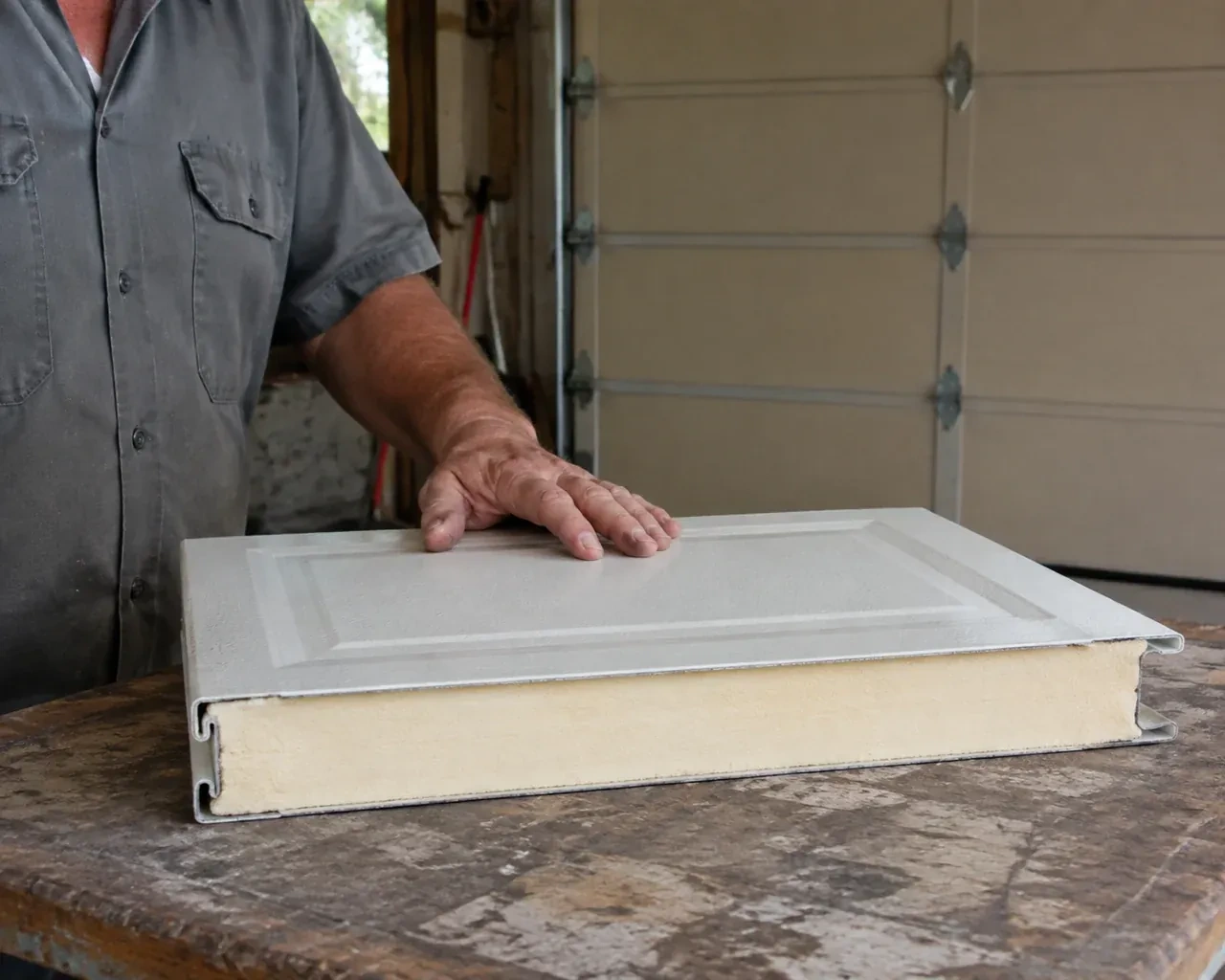
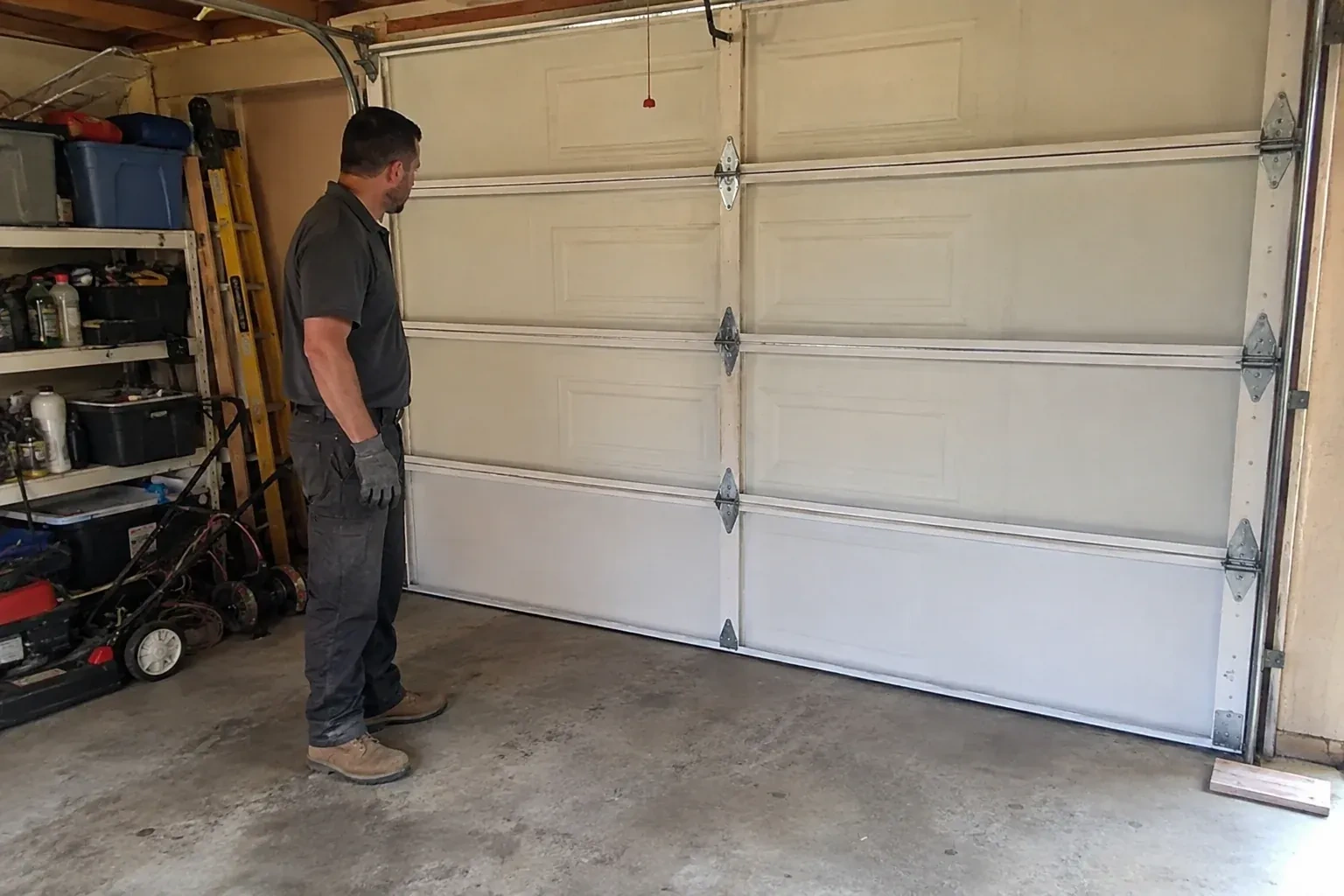 Garage Door Panel ReplacementYears of slap shots have peppered the lower two sections with dents.
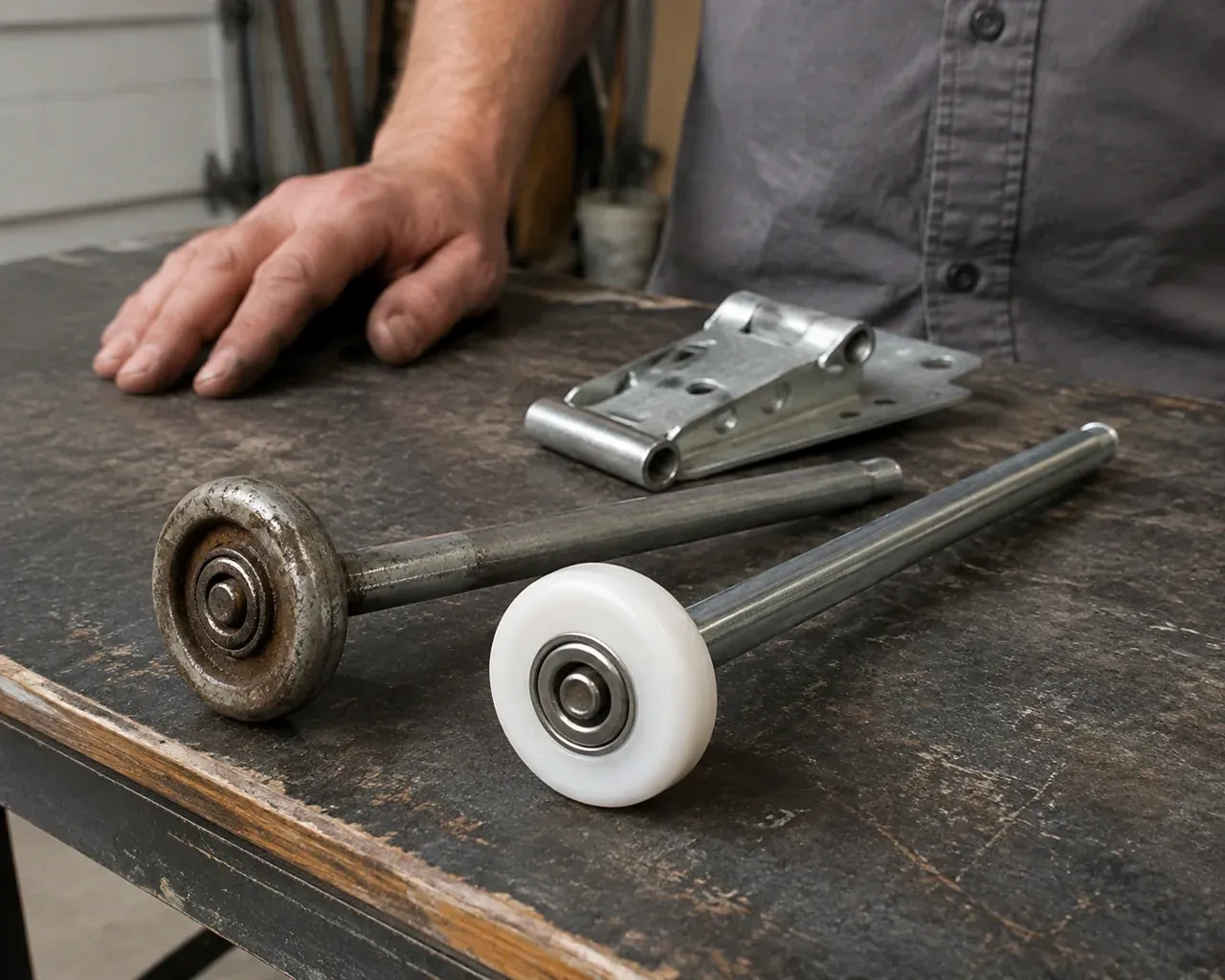 Garage Door Roller ReplacementThe door shudders as it rises, worst where the track bends from vertical to horizontal.
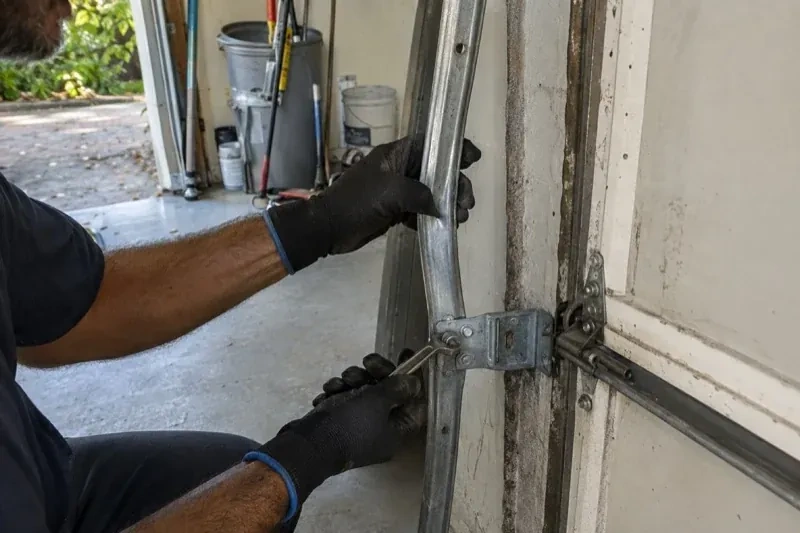 Garage Door Track Repair or ReplacementBacking out this morning, the mirror caught the track beside the door.
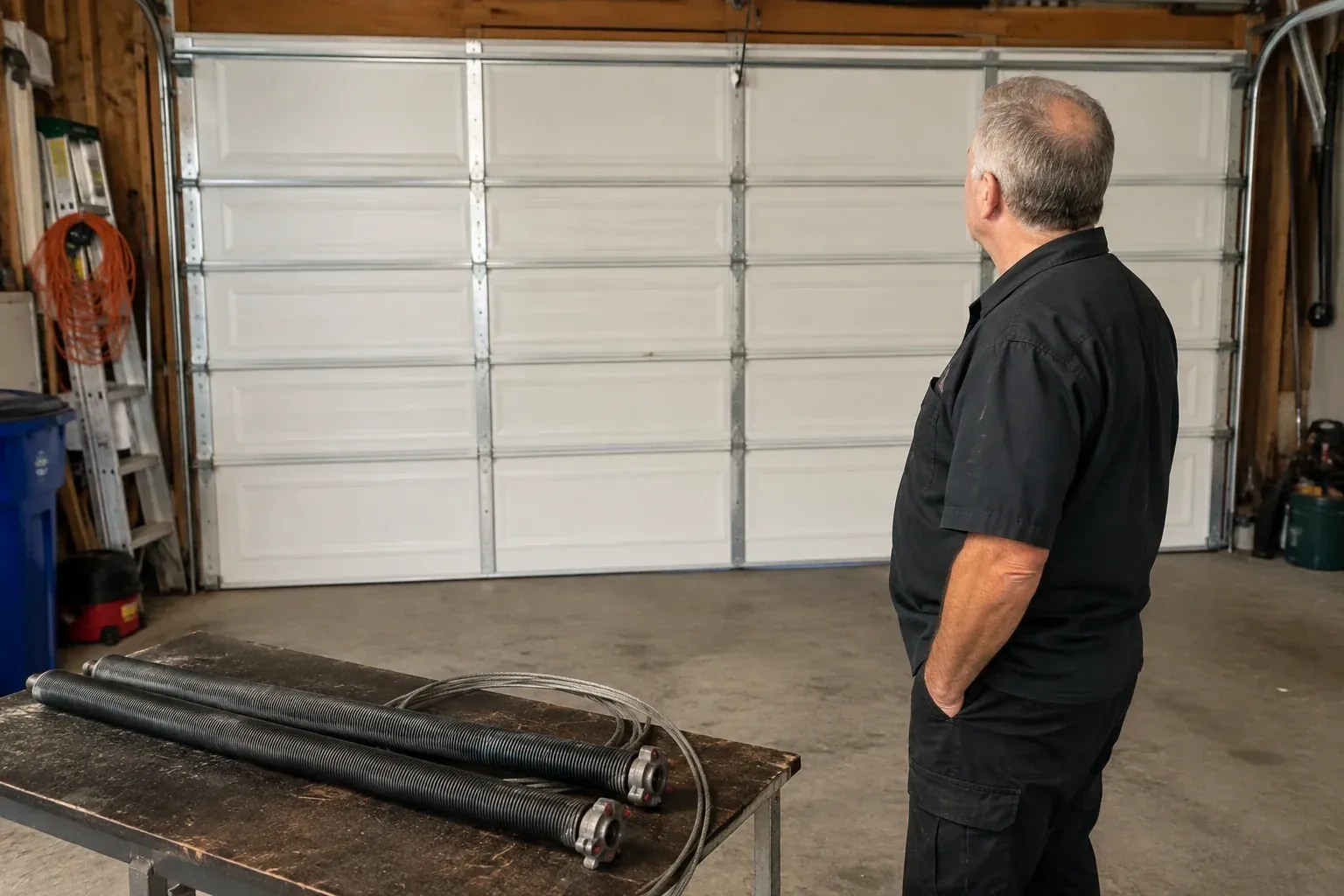 Torsion Spring ReplacementAfter pulling the red release cord, you tried lifting the door yourself and it would barely leave the floor.
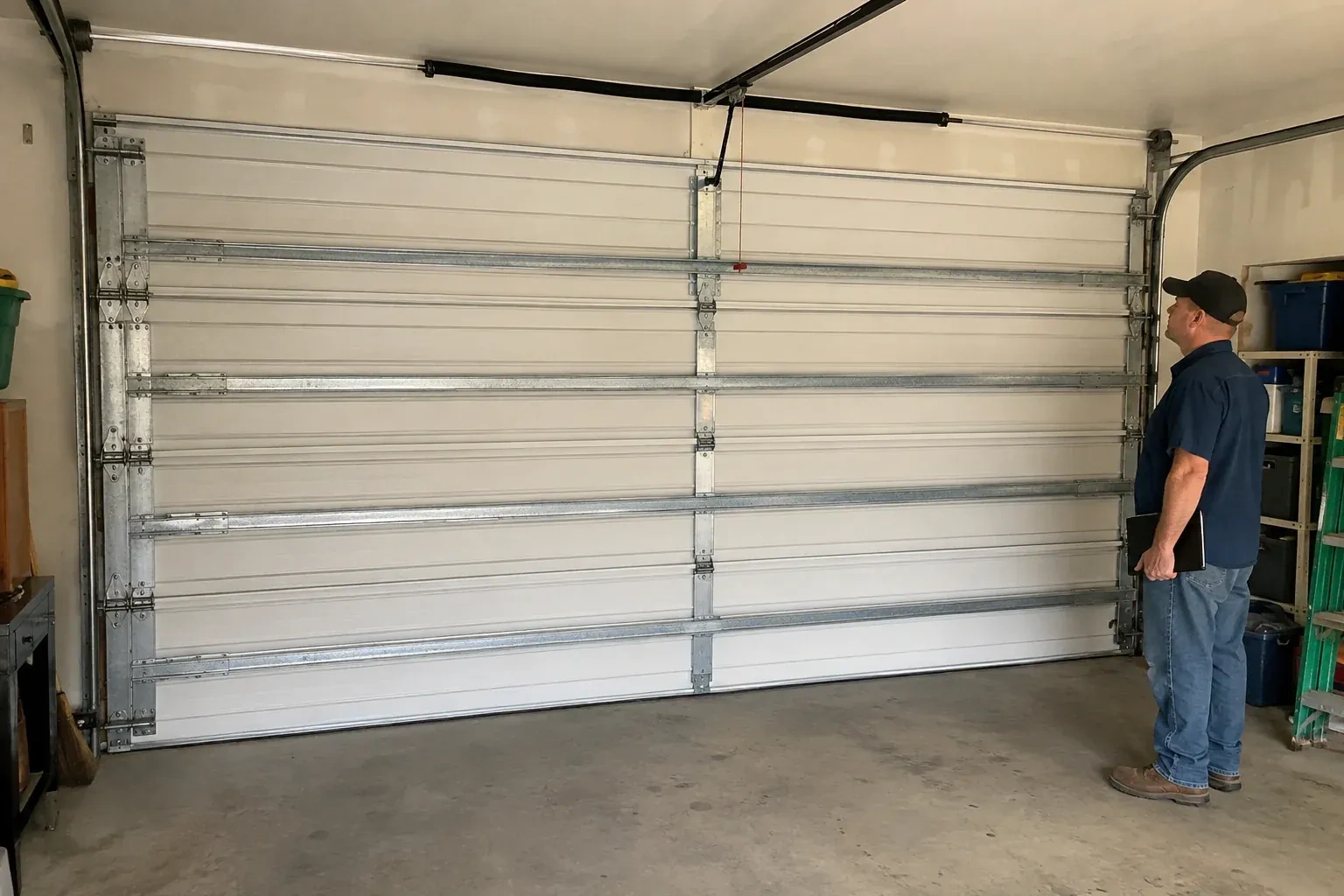
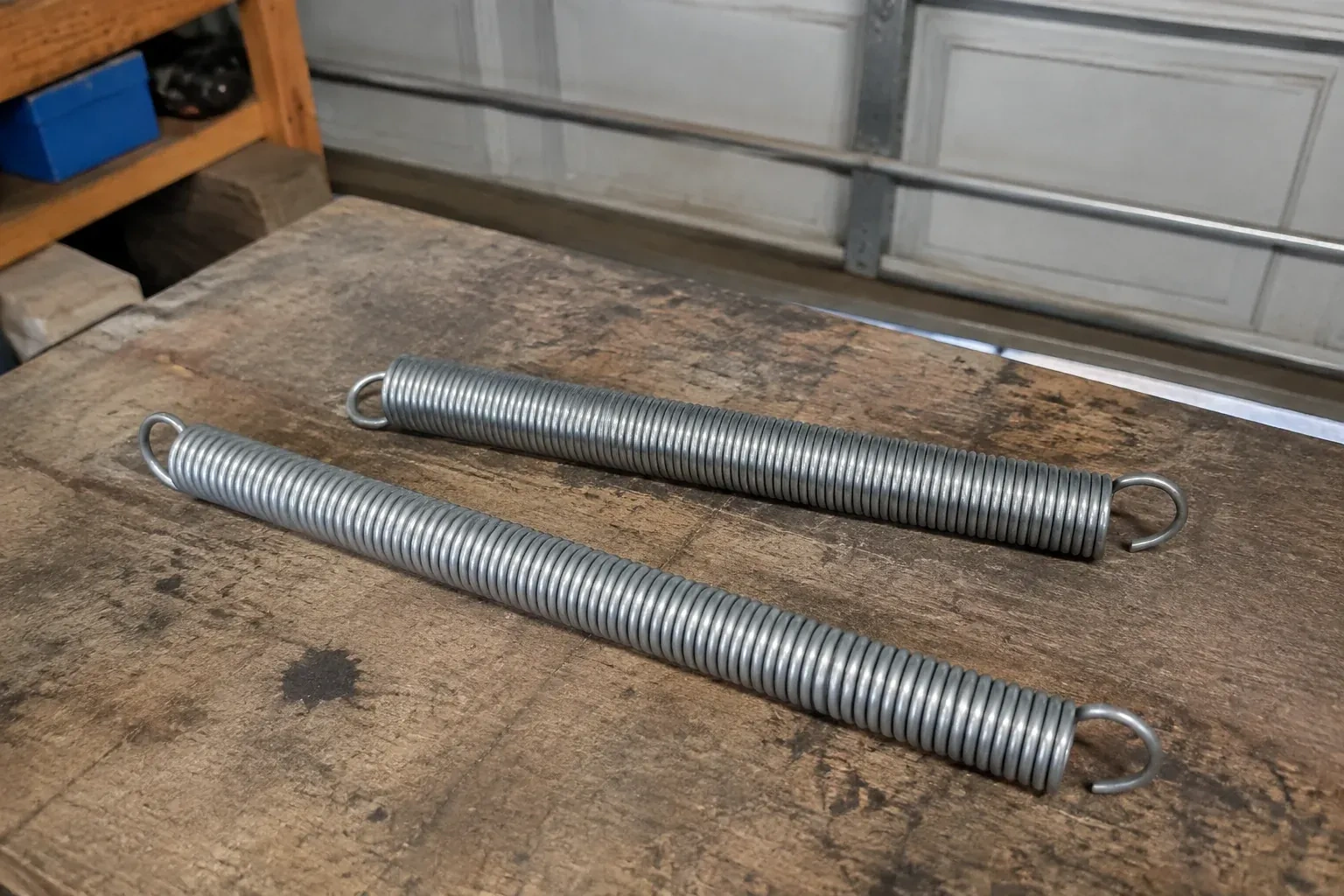 Extension Spring ReplacementYou pulled the red cord to open the door during a power cut and it barely moved.
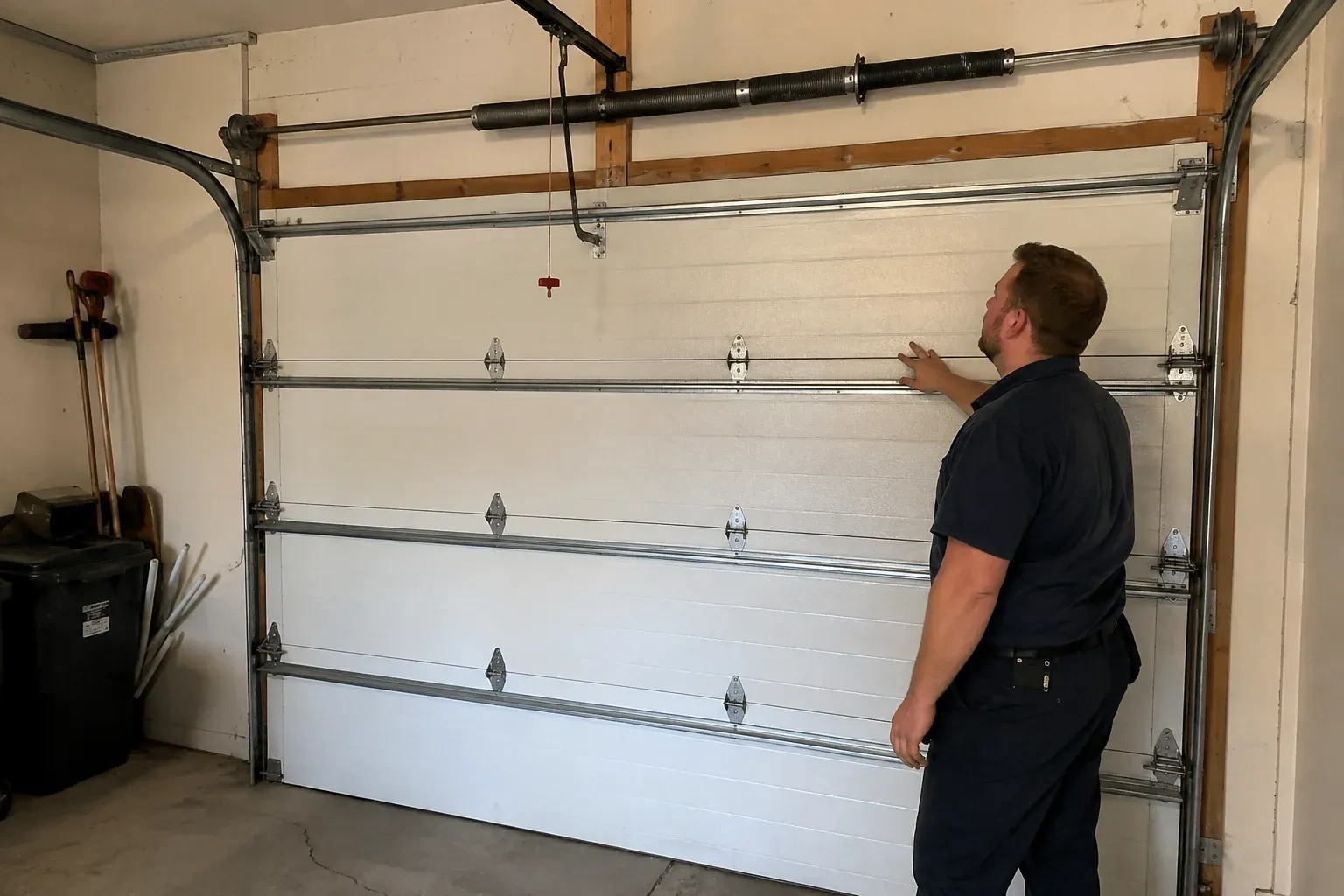 Garage Door Balance AdjustmentWith the door closed, daylight shows under one bottom corner and the seal is squashed flat at the other.
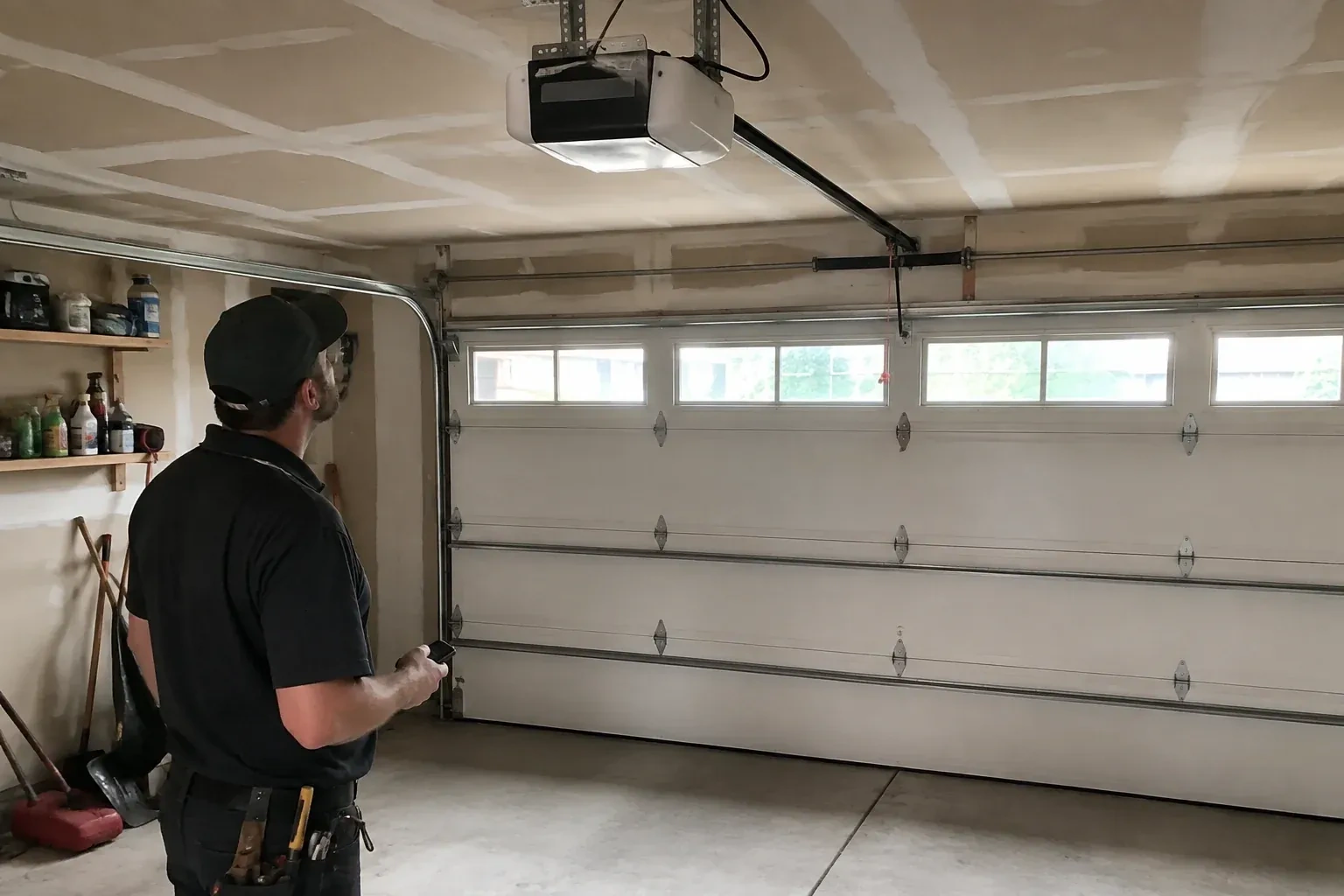 Garage Door Opener ReplacementYou swapped the old wooden door for a heavier insulated steel one, and the twenty-year-old opener that was kept has never settled.
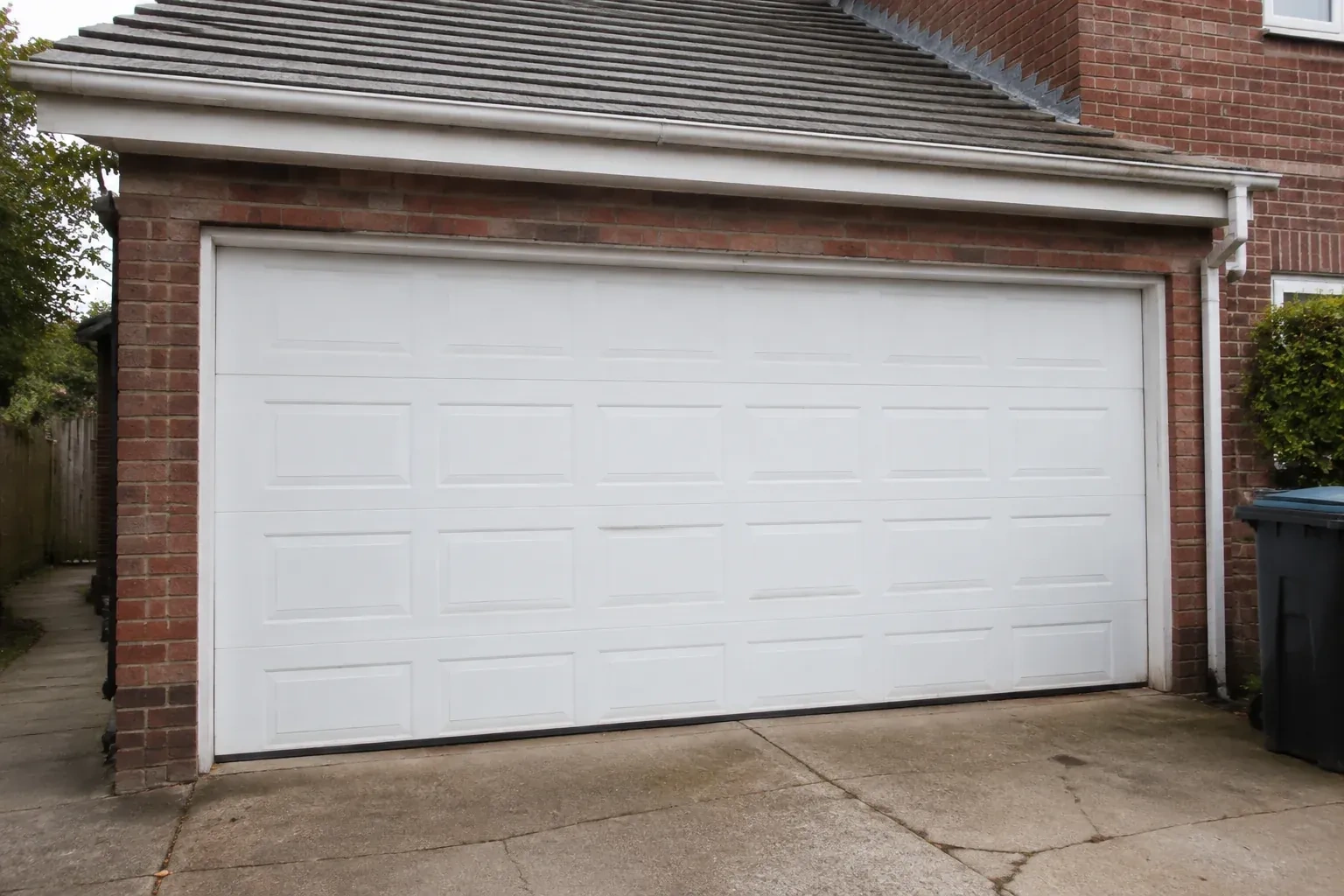 Sectional Garage Door ReplacementYou are adding an automatic opener to an older, very heavy door.
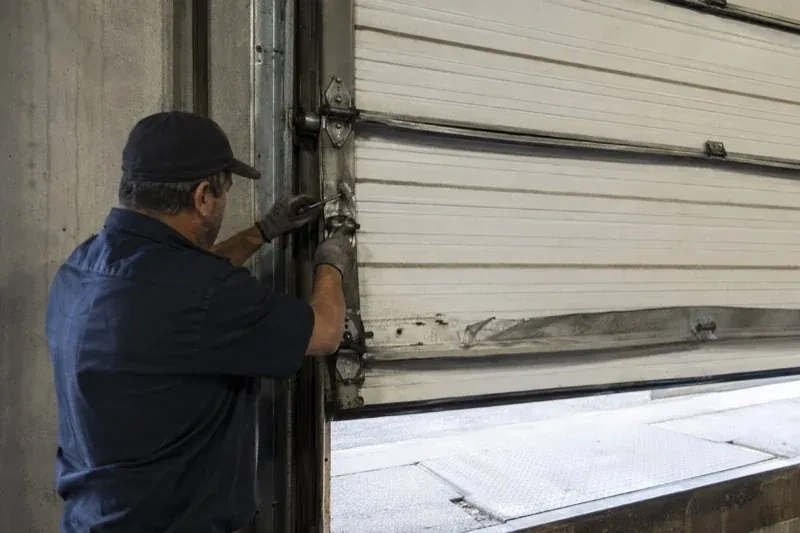 Commercial Sectional Door RepairThe operator runs and the drive chain moves, yet the sectional door hesitates near the floor.
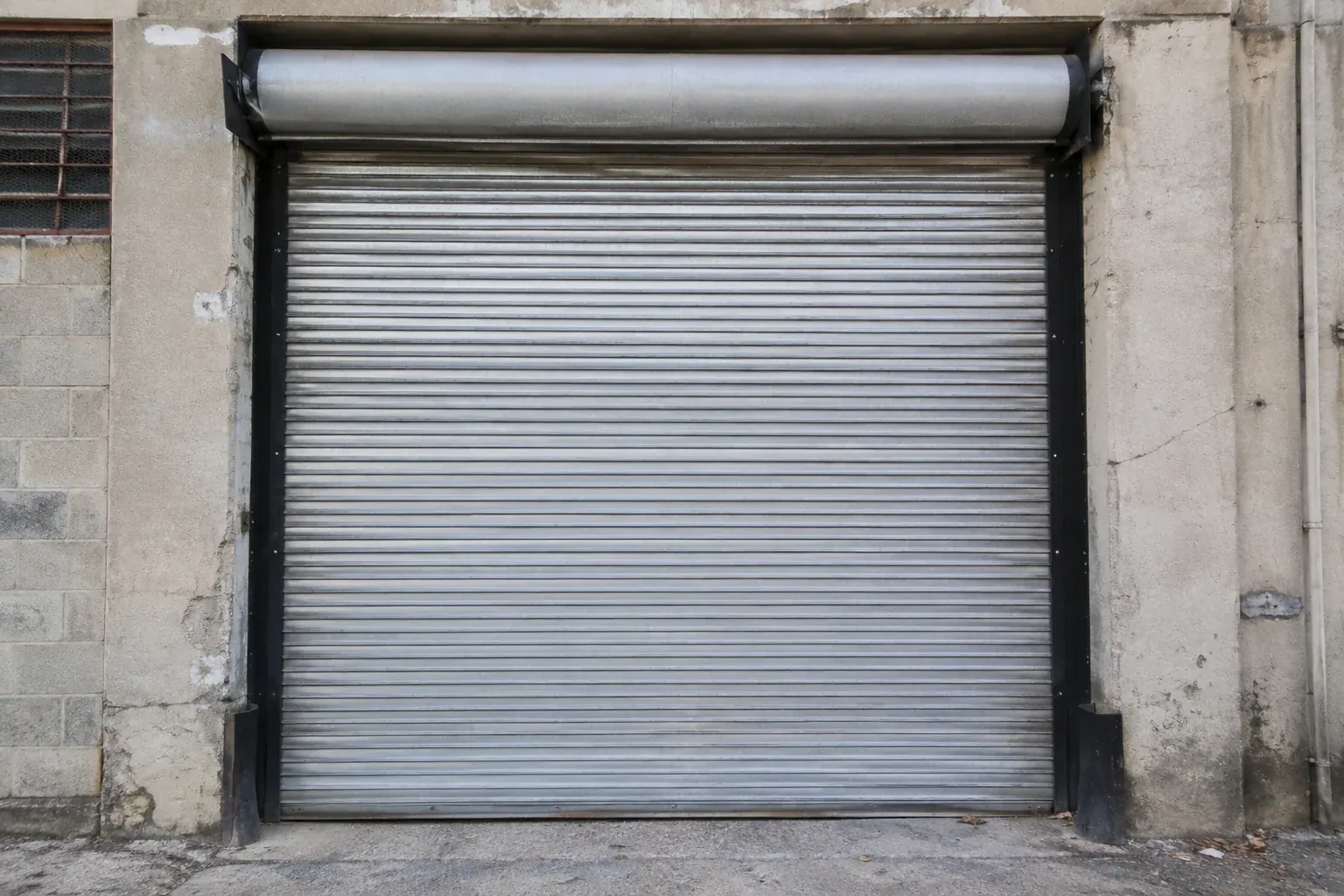 Commercial Rolling Door RepairThe hand chain takes far more effort than it did last month.