Garage Doors · London
Owner's notes
Understanding the why behind a repair makes the fix easier to trust. Our advice pages explain how each part works, what happens when it wears, and how the repair restores it.
- Issue 1Extension Spring Replacement: preparing for the visitThe opener groans on the way up and the door slams the last foot on the way down, hard enough to rattle the windows. The motor is the same one it always was; something in the springs has stopped…Read
- Issue 2Garage Door Track Repair or Replacement: what the visit coversWhat you get back is a door that runs its full height without a catch, hesitation or bang, with every roller seated in its channel and both sides rising together. The track sits plumb and firm on the…Read
- Issue 3Garage Door Perimeter Weatherstrip: reading the quoteWipe the fin with a silicone spray or a silicone lubricant on a cloth in late autumn and once or twice through the winter. The film cuts the odds of meltwater bonding the fin to the cold door face…Read
Straight talk
Repair & Maintenance
Should I have the door inspected when buying a house?
It answers the questions a home inspection leaves open. A general inspector confirms the door opens and closes; a door technician records the make and age of the hardware, how much life the springs and cables appear to have, whether the safety devices pass, and what to budget for. For a seller, the same report settles a buyer's questions before they are asked and shows the door was cared for. Garage Door Safety Inspection
Will the tune-up include replacing worn parts?
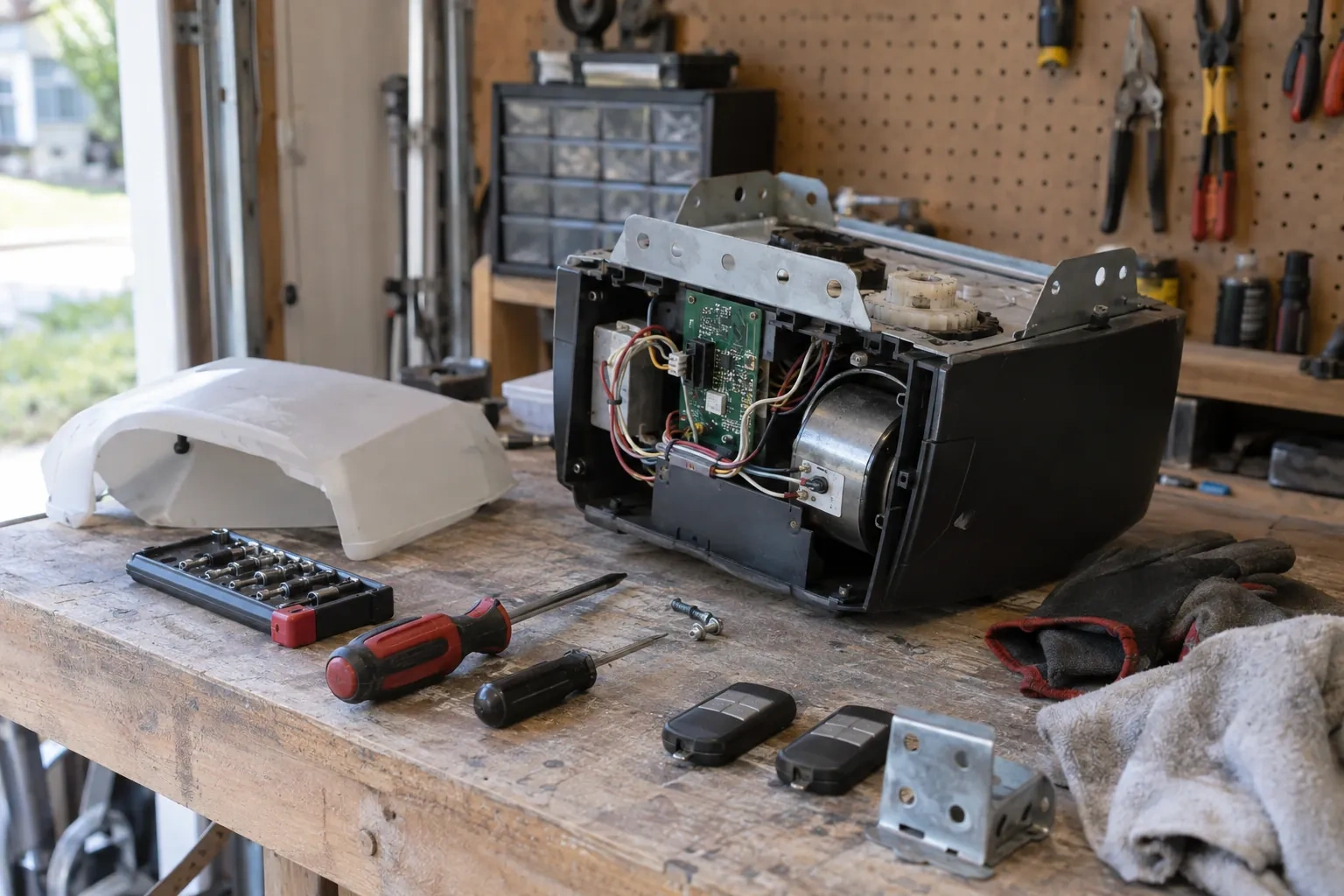
Small wear items found on the day, such as a roller or a hinge on a middle section, a bottom seal or a few fasteners, can often be replaced during the visit if you agree and the part is on the truck. Larger items, including springs, cables, drums, bottom brackets, a bent track or an opener gear, are written up as separate repairs with their own quote so you can decide with the facts in hand rather than under a raised ladder. Garage Door Tune-Up
Why did the door come off its track in the first place?
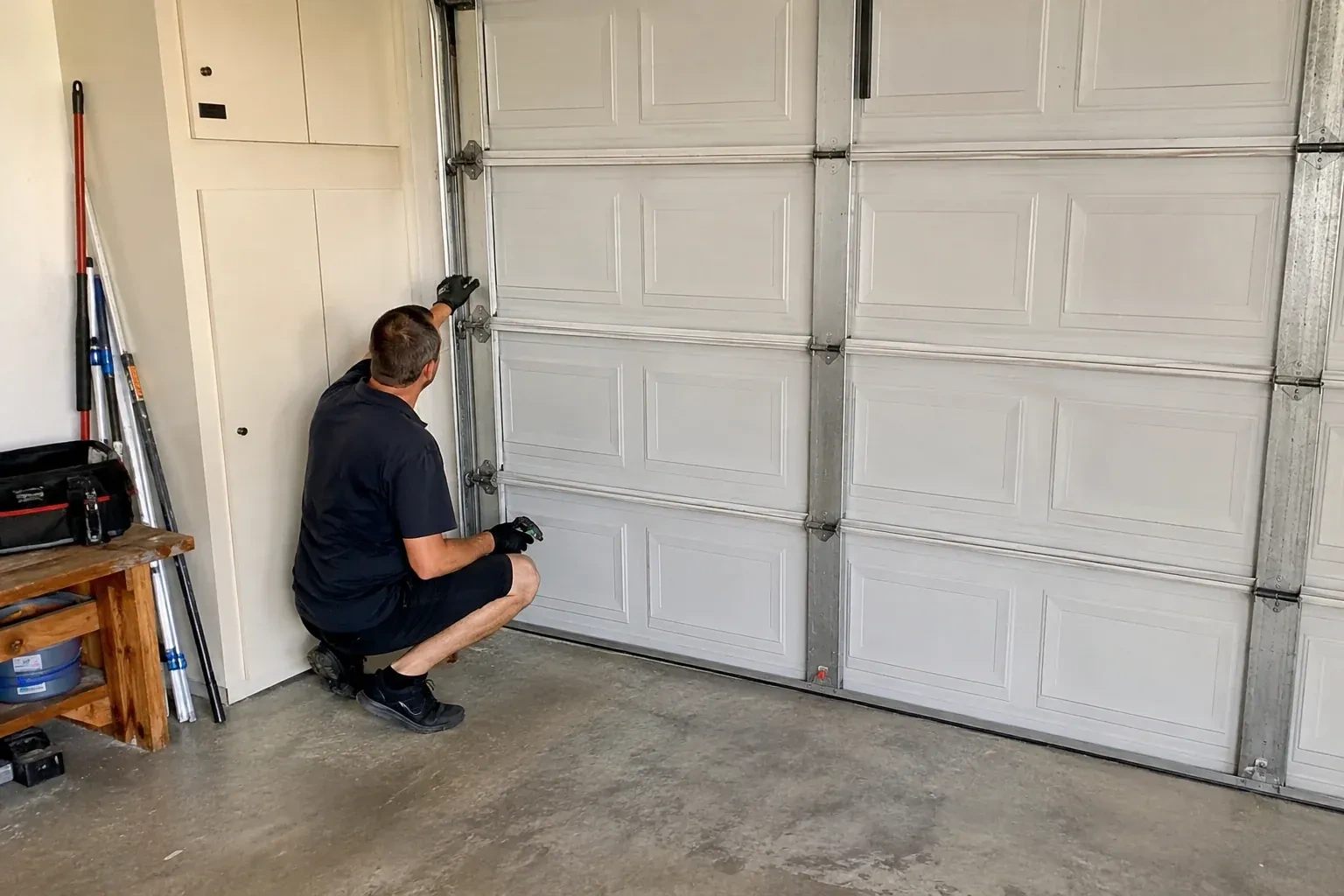
The usual causes are an impact from a vehicle, a lifting cable that broke or slipped off its drum, ice holding the door to the floor while the opener pulled, an obstruction under the door, worn rollers that no longer hold in the rail, or track brackets that have loosened from the wall. Finding which one applies is the first part of the visit, because the reset is only durable once the cause is corrected. Off-Track Garage Door Reset
Can one damaged section be replaced without replacing the whole door?
Usually, yes. A sectional door is built from separate sections joined by hinges, so a single creased, rusted or cracked section can be unhinged and exchanged while the others stay in place. The conditions are that a section for your make, model and size is still available and that the rest of the door and its hardware are in good order. When damage spans several sections or the design is discontinued, a full door is compared alongside. Garage Door Panel Replacement
Springs & Hardware
Should I replace rollers when the springs are replaced?
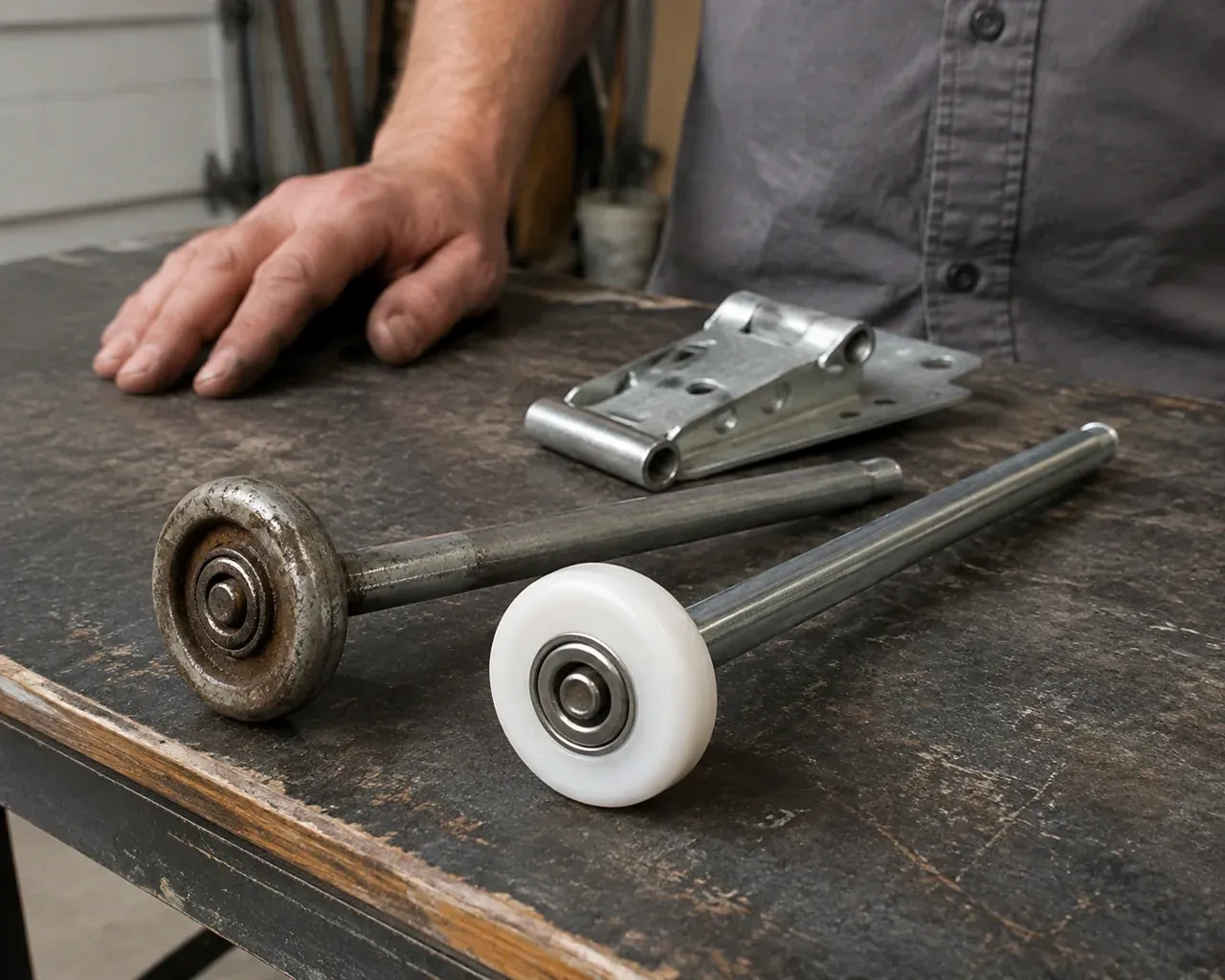
It is a common and sensible pairing. Rollers and springs are the two most frequently replaced parts on a door and wear on similar timelines, so a door that has used up its springs has usually worn its rollers too. Doing both in one visit means the door is secured and the opener disconnected once, and the bottom brackets, which are handled for spring work anyway, receive new rollers while they are accessible. Ask for the rollers to be checked whenever spring work is booked. Garage Door Roller Replacement
Do the rollers get replaced with the hinges?
They are checked every time and replaced when they need it. The roller stem sits in a tube on the edge hinge, so when that hinge comes off the roller is already in hand, and fitting a new one adds a minute. A wheel that is cracked, flat-spotted or grinding on its bearing is the sort of thing that strained the hinge, so leaving it would ask the new hinge to carry the same load. Garage Door Hinge Replacement
Why is the horizontal track sagging?
The horizontal run hangs from the ceiling on back hangs of perforated angle, and it sags when a hanger bends, its screws pull out of a joist, or it was only ever fixed into drywall. A sagging hanger droops that run out of level or its intended pitch. The fix is a straight or new hanger screwed into solid framing, with the run set to the manufacturer's specified pitch and matched to its partner; a door that drifts back toward the opening once raised is a separate, balance-related symptom. Garage Door Track Repair or Replacement
Will the springs be checked as part of cable work?
Always. Cables and springs are one system, and a spring that is weak, mismatched or wound short is a frequent reason a cable goes slack in the first place. The technician looks for breaks, measures the spring against the door weight, and confirms the correct number of turns when winding back. If a spring needs replacing, that is explained and offered as its own decision rather than folded in unannounced. Garage Door Cable Replacement
Openers & Access
Why does my door go back up when I try to close it?
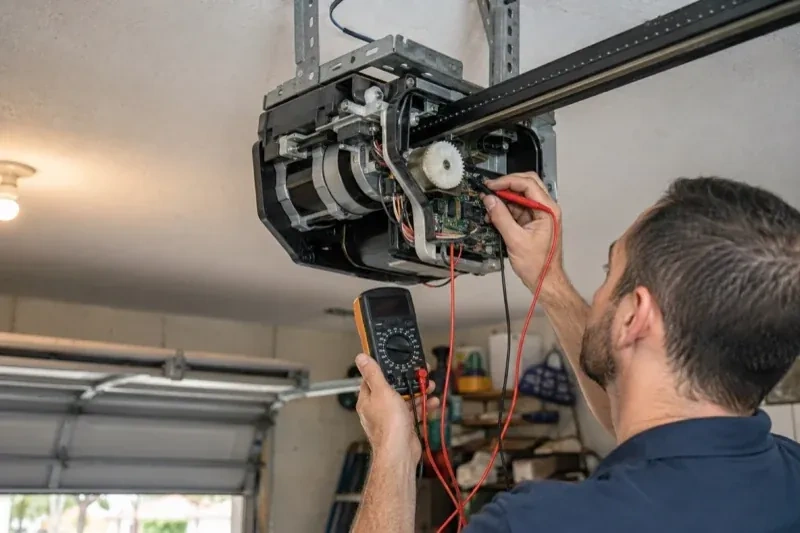
The opener believes something is in the way. Either the photo-eye beam near the floor was broken, misaligned or blocked, or the door met more resistance than its force setting allows, often from a frozen seal, stiff rollers or a travel limit set slightly too long so the door hits the slab. The indicator light on the head unit usually tells which of the two it was, and the technician confirms it by testing rather than guessing. Garage Door Opener Diagnosis and Repair
What is the trolley, and why would it get stuck?
The trolley is the carriage that rides along the rail, pulled by the chain, with the door arm hooked to it. It gets stuck when the travel limits creep and it is driven onto the stop bolt at the head end or the stop tab at the door end, where the motor hums but nothing moves. The technician slackens the chain, runs the trolley off the stop under power, and pulls the limit back so it stops short in future. Chain-Drive Opener Repair
How often should belt tension be checked?
A look every few months is enough: with the door closed and again with it open, the belt should run level with no sag below the rail. A yearly service that checks tension against the spring length, looks at the sprocket and pulley and runs the balance and reversal tests keeps a belt drive quiet for its whole life. Check again after the first hard cold of the winter. Belt-Drive Opener Repair
What information helps when I ask for a quote?
The width and height of the door, whether it is single or double, what it is made of and whether it is insulated, the make and model on the old opener's label, the ceiling height and what the ceiling is made of, where the nearest receptacle is, and which features you want: belt or chain, battery backup, keypad, phone control. Photographs of the opener, the door's top section and the ceiling settle most questions. Garage Door Opener Replacement
Installation & Upgrades
What panel materials are commonly available?
Sectional doors are commonly made with steel, aluminum, wood or composite construction, with model-specific finishes and insulation options. Each differs in weight, maintenance needs and appearance. The useful comparison considers exposure, desired style, garage use and available product data, then carries the chosen weight into the spring and hardware selection. Sectional Garage Door Replacement
How is the opening measured before ordering?
The installer records finished width and height at multiple points, then checks the floor, jambs and header for level, plumb and useful attachment surfaces. Sideroom, headroom and backroom are measured to nearby obstructions. Beams, pipes, lights, storage racks and opener equipment are included because the door sections and tracks need a clear path from closed to fully open. Insulated Steel Garage Door Installation
Why does the technician inspect the jambs and framing?
Door loads travel through the tracks and brackets into the jambs, then into the building structure. Soft wood, split material, loose blocking, shallow anchors, or unsupported trim can interrupt that path. Inspecting the mounting surfaces shows whether ordinary preparation is sufficient or whether structural work should be coordinated before the new system is attached. Wind-Rated Garage Door Replacement
Will my current garage door opener stay in place?
That depends on its supported door size and weight, rail arrangement, condition, controls and safety features. The assessment compares its product information with the selected door and checks whether the attachment can be reinforced correctly. When it remains, travel and force are reset for the new balanced assembly. Any opener change is identified separately in the planned scope. Carriage-House Garage Door Installation