Springs · Dorchester
Garage Door Balance Adjustment in Dorchester
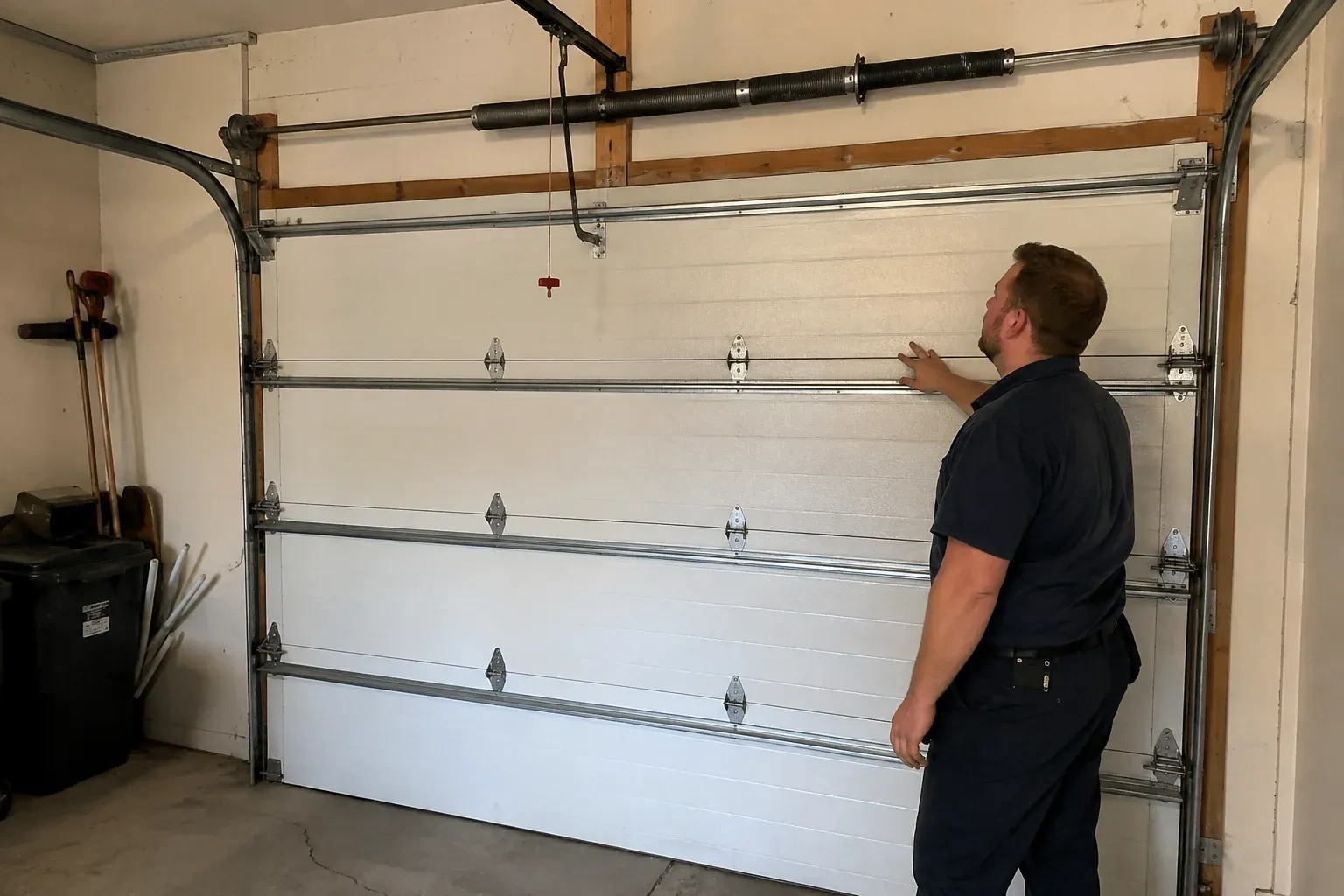
With the door closed, daylight shows under one bottom corner and the seal is squashed flat at the other. As it rises, the left side leads by an inch or two, and the top section twists slightly as it turns into the horizontal track.
Garage Door Balance Adjustment
In plain words
Balance changes for ordinary reasons. Springs are rated for a certain number of cycles and lose a little tension as they age. A new bottom seal, insulated panels, a window section or a decorative overlay adds weight the original springs were never sized for. Rollers stiffen, hinges wear, and in a cold snap the whole system feels heavier for a few weeks. Any of these tips the door from weightless to a chore. A balance adjustment starts by identifying which of them is at work, then resets the springs to suit the door as it is today, and corrects the friction so the adjustment holds.
How the visit goesWith the door closed, daylight shows under one bottom corner and the seal is squashed flat at the other. As it rises, the left side leads by an inch or two, and the top section twists slightly as it turns into the horizontal track.
Dorchester
How the visit goes
Friction along the path
Some doors that feel heavy are not short of spring tension at all; they are dragging. The technician runs a hand and an eye along the vertical and horizontal tracks for dents, misaligned joints and brackets that have pulled away from the jamb, spins each roller to find seized bearings or cracked wheels, and flexes each hinge for play or splits. Dry, worn rollers alone can add real effort to every lift. Binding at one point in the travel, rather than heaviness everywhere, is the signature of a friction problem, and correcting it first means the springs are then adjusted to the door's true weight rather than to the drag.
Removing the friction that made the door feel heavy
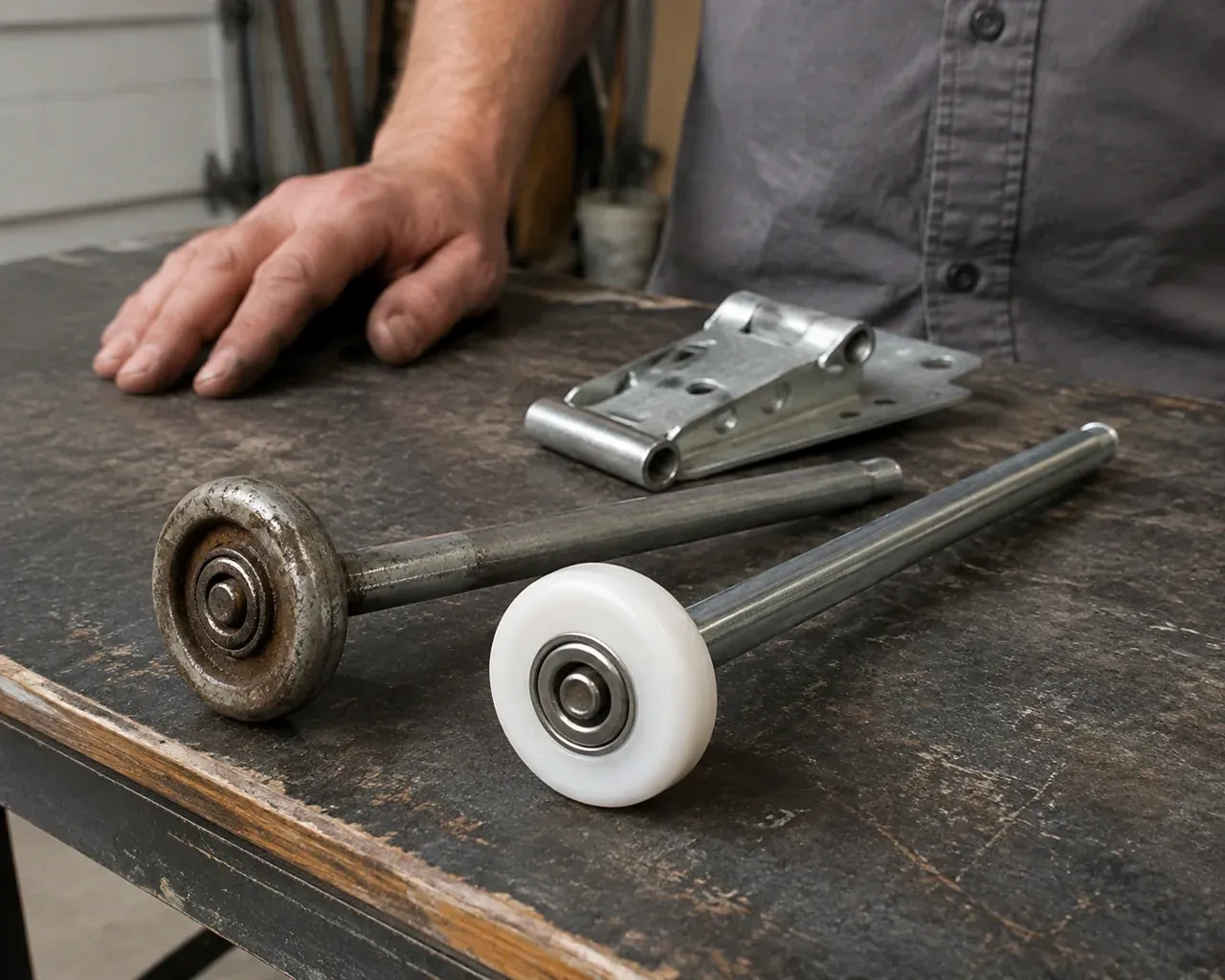
Where the inspection found drag, it is dealt with before the springs are judged. Seized or worn rollers are swapped for new ones, one hinge at a time so the door never leaves its track. Track sections knocked out of line are eased back plumb and their brackets tightened to the jamb; a dent is dressed out or the section replaced. Hinges with play are replaced and their screws driven into sound material. The springs, hinge pins, roller stems and bearings then receive a light coat of garage-door lubricant. After this the door is lifted again, and it is common for the heaviness to be largely gone before any turns are added.
A record of the setting
Before leaving, the technician tells you how the door was set: the number of turns on each torsion spring or the hook position on each extension spring, the spring dimensions, the door's measured weight if it was weighed, and any parts that were replaced. Writing this on a card by the opener or inside the manual saves a future technician from starting from scratch, and it gives a reference point if the door ever starts to drift. Springs age gradually, so a note that says the door held at a certain number of turns tells a later visit how far things have moved.
Garage Door Balance Adjustment
In the van
- Door scale
- Nylon or steel rollers
- Garage-door lubricant
- Extension springs and S-hooks
- Track clamps or locking pliers
What affects the quote
Same fees day, night or weekend
1Door height and lift type
Taller doors and high-lift or vertical-lift hardware carry more spring turns and different drums, so setting and testing them takes longer than a standard seven-foot door.
2Commercial or oversized doors
Doors wider or heavier than a standard residential opening use heavier springs, sometimes several on one shaft, and take longer to wind and test, which the quote reflects.
3Lubrication and tune-up
Some people combine the balance adjustment with a full lubrication and hardware tightening. That bundle is priced as a whole and saves a separate maintenance visit.
Garage Door Balance Adjustment: questions
How should I prepare the garage for the visit?
Move the car out if you can and clear the floor near the door and beneath the spring shaft, since the technician will be on a ladder there with winding bars. Take down anything hanging from the tracks or stored on top of the horizontal rails. Leave the door where it is, make sure the wall button and the opener are reachable, and have any spring or opener paperwork handy.
What does it mean for a garage door to be balanced?
It means the springs carry nearly all of the door's weight, so the door itself feels close to weightless. Balanced, it will stay put at any partly open position when moved by hand, stay fully open on its own, and close without slamming. The opener then only has to guide the door rather than lift it, which is how it was designed to work.
What information helps when I book the visit?
Whether the door drifts up, sinks, or hangs crooked when released; whether there is one spring on a shaft above the door or springs along the tracks; whether it is a single or double door and roughly how tall; when the springs were last changed if you know; what has been added to the door; and whether the opener strains, reverses or stalls. A photo of the spring area is useful.
Springs & Hardware
- Garage Door Hinge ReplacementWith the door closed and a flashlight on the inside face, one of the hinges near the edge has a…
- Garage Door Track Repair or ReplacementBacking out this morning, the mirror caught the track beside the door.
- Garage Door Cable ReplacementThere was a sharp crack from the garage, and when you went to look the door had dropped on one side…
Garage Door Balance Adjustment near you
In Dorchester we work on garage doors of every age and size: single and double residential doors, insulated and uninsulated, wood and steel, plus commercial rolling and sectional doors. The service pages explain the repairs, replacements and installations that apply to each.