Openers · Thames Centre
Garage Door Opener Diagnosis and Repair in Thames Centre
It is a January morning and the door lifts about a hand's width, groans, and settles back down. When you pull the release and try by hand the door feels far heavier than it used to, and the bottom seal is stuck hard to the slab.
Garage Door Opener Diagnosis and Repair
In plain words
Every diagnosis ends with the same two tests, because an opener that moves the door is only half fixed. First, a length of 2x4 is laid flat on the floor under the centre of the door and the door is closed onto it; it must reverse on contact and return to fully open. Second, with the door closing, an object is passed through the photo-eye beam near the floor; the door must stop and reverse. These tests are how the opener standard defines a working unit, and they are how the technician proves that the fault found was the fault fixed.
How the visit goesFor a few days there was a grinding sound whenever the door started moving. Now the motor spins freely and the door stays exactly where it is. On the hood of the car there is a scatter of white plastic shavings that fell from the unit above.
Thames Centre
How the visit goes
What the blinking lights are saying
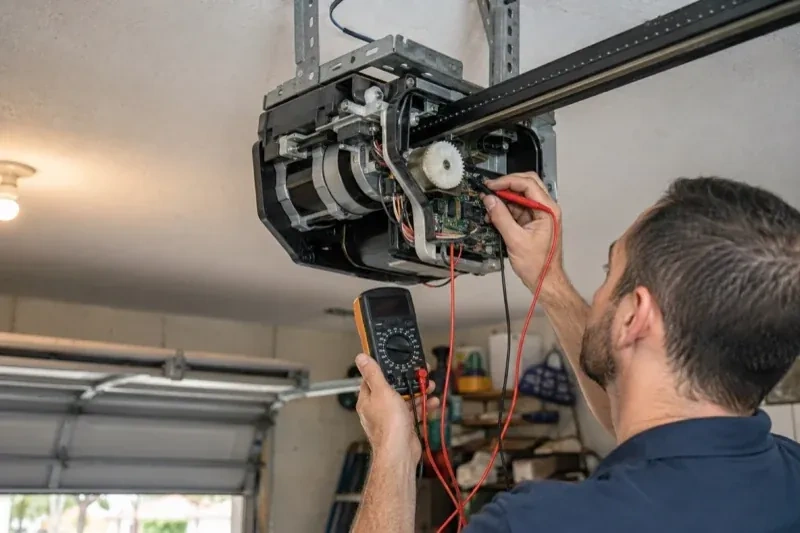
Many openers describe their own fault. The head unit flashes its light bulbs, or an up arrow and a down arrow, in a numbered pattern, and some display a code on the wall control. The technician counts the pattern, identifies the exact model from its label, and matches the two on the manufacturer's chart: one family of codes means the sensor circuit is open or obstructed, another means the motor was told to move and nothing turned, another means the door needed more force than the limit allows. The code narrows the search; a hands-on test then confirms it, because a wiring fault can imitate a sensor fault.
Door first, opener second
When the by-hand check shows the door is heavy, drifting or binding, the work order changes. The opener is left disconnected and the door side is corrected first: worn rollers replaced, dry hinges and rollers lubricated, loose track brackets tightened, a dropped header bracket re-secured, and spring or cable faults handed to the tensioned-hardware work they require. Only when the door lifts and holds by hand is the trolley re-engaged and the opener tested again. Very often the opener that seemed faulty runs perfectly once it is moving a balanced door, and the repair becomes lighter and longer-lived than any change made at the motor.
Ready for the cold months
After a winter diagnosis the door is set up for the season rather than for the day. The bottom seal has been freed and, if it was tearing, replaced, with a light silicone wipe so it releases from the slab. Moving parts carry a low-temperature lubricant. The photo eyes have been cleaned and, where low sun was blinding one, shaded or swapped side to side. Force has been set for a cold, stiff door without being pushed up to hide one. Keep snow and ice cleared from the threshold and the sensor lenses, and expect the door to be a shade slower on the coldest mornings.
Garage Door Opener Diagnosis and Repair
In the van
- Wall control
- Trolley and carriage
- Logic board or receiver
- Garage door lubricant
- Travel limit switch or RPM sensor
What affects the quote
Same fees day, night or weekend
1Getting in when the door is stuck shut
A garage with no side door and no house connection means working the release from outside before any test can begin, and the quote includes that entry step.
2Battery backup pack
DC openers with backup power carry a battery that ages like any other. If it is at the end of its life, its replacement is listed separately from the diagnosis.
3Remotes and keypads
Each remote or keypad to be reprogrammed, re-batteried or replaced is counted individually. Say how many devices you have so the quote reflects all of them.
Garage Door Opener Diagnosis and Repair: questions
Why does my door go back up when I try to close it?
The opener believes something is in the way. Either the photo-eye beam near the floor was broken, misaligned or blocked, or the door met more resistance than its force setting allows, often from a frozen seal, stiff rollers or a travel limit set slightly too long so the door hits the slab. The indicator light on the head unit usually tells which of the two it was, and the technician confirms it by testing rather than guessing.
My remote only works when I am close to the door. Why?
Short range is almost always interference or a weak signal, not a broken opener. Certain LED bulbs, including ones fitted in the opener's own sockets, emit noise on the frequency remotes use. A remote battery near the end of its life also loses reach before it fails outright. The technician tests range with a known-good remote, swaps bulbs, checks the antenna wire hangs free below the head unit, and replaces the battery or remote as needed.
The wall button works but none of my remotes do. What happened?
Three things account for most of these. The wall control has been put into lock mode, sometimes by a child or a visitor, which blocks all remotes until it is released. The opener's memory was cleared, usually by someone pressing the learn button while trying to program a new remote, so every remote needs programming again. Or the receiver in the head unit has failed. The first two are simple settings; the third is a part.
Openers & Access
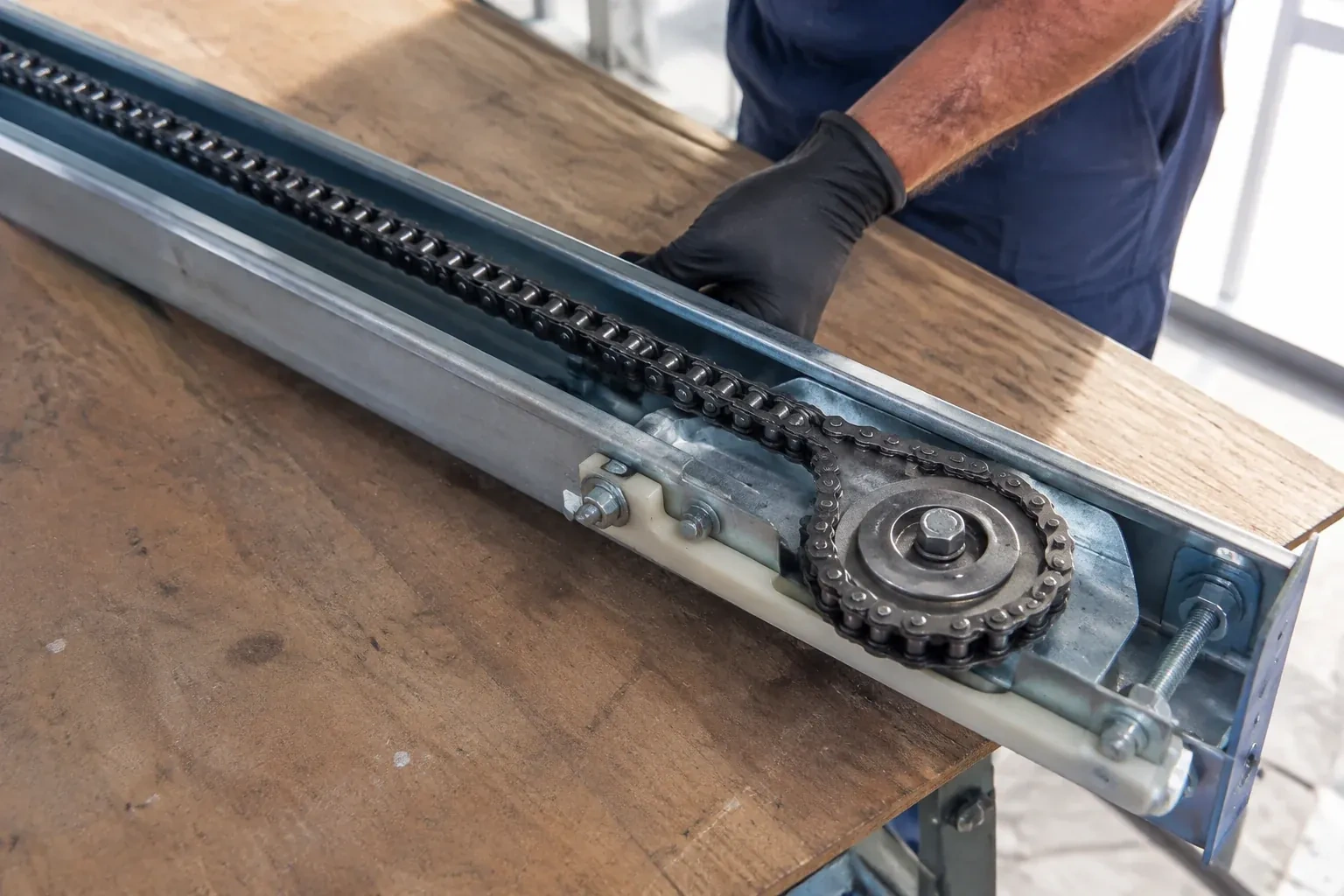
- Belt-Drive Opener RepairPress the remote and the motor runs its full cycle, lights on, the usual whir, but the door does…
- Garage Door Opener ReplacementYou swapped the old wooden door for a heavier insulated steel one, and the twenty-year-old opener…
- Photo-Eye Sensor Alignment or ReplacementThere are no sensors at the floor at all, or a previous owner has wired the pair together up beside…
Garage Door Opener Diagnosis and Repair near you
The garage door services we provide in Thames Centre range from a single adjustment to a complete new installation. In between sit spring and cable replacement, opener repair, roller and hinge work, weather sealing and safety checks, each one done carefully and explained before it begins.